Get Full Government Meeting Transcripts, Videos, & Alerts Forever!
Get email alerts on the Abortion Policy topic
No spam. Unsubscribe anytime.
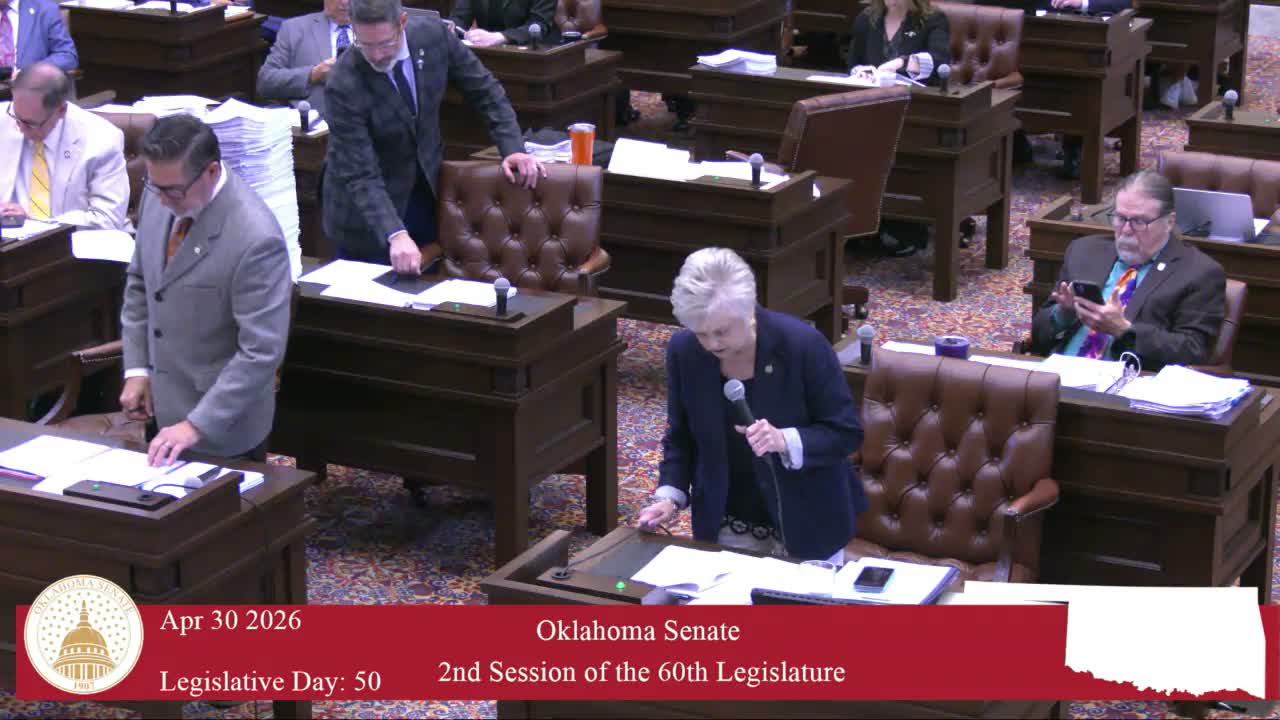
Senate approves bill to criminalize trafficking of abortion-inducing drugs after hours of debate
Summary
The Oklahoma Senate narrowly passed House Bill 1168, which would make trafficking abortion-inducing medications a felony; supporters said it prevents shipments of pills into the state while opponents warned it could criminalize everyday caregivers and chill medical care. The measure passed 37-10.
The Oklahoma State Senate on May 1 passed House Bill 1168, a bill the author described as a ban on trafficking abortion-inducing medications, after several hours of questions and debate and a final roll-call vote of 37 ayes and 10 nays.
Senator Brent Bullard, the bill sponsor, told colleagues that HB1168 defines abortion and makes it a felony for a person who “delivers an abortion-inducing drug to that person, or possesses it with the intent to deliver.” He said the intent requirement is essential, and he argued the measure is both preventive and enforcement-oriented: “It is a felony to traffic,” he said during his explanation of the measure.
Supporters said the law targets third-party distributors and will stop large shipments of medication arriving by carriers. Senator Bullard cited an estimate for the state that “4,130 pills came into this state” in the last year and said the measure is meant to “stop quite a bit of it from coming into our state through the preventative side.” Proponents framed the bill as a step to protect unborn life and to disrupt illegal supply chains.
Opponents warned HB1168’s language is broad and could reach well beyond commercial traffickers to friends, family members or pharmacists. Minority Leader Kurt said the bill was rushed onto the agenda and characterized it as political: “This bill is about creating a political standard instead of a medical standard,” he said. Senator Hicks argued the measure “expands criminal law into deeply personal medical decisions, casting a wide net that doesn’t just target providers, but everyday people,” and warned that vague standards about what someone “knows or has reason to know” could chill clinicians and pharmacists.
Lawmakers pressed the sponsor about specific legal and medical boundaries: senators asked how investigators would determine intent, how the bill would treat medications used for miscarriage management or ectopic pregnancy, and which agencies would enforce the law. Senator Bullard said the measure preserves exceptions for preserving life and health and that enforcement would fall to “anyone with law enforcement jurisdiction within the state of Oklahoma.” He also said intent would be proved in the same way as other criminal cases, with evidence brought by investigators and prosecutors.
Other critics said the bill failed to address underlying causes of abortion and that criminal penalties risk creating barriers to care. Senator Goodwin said the state should invest in prenatal and postpartum supports rather than expanding felony penalties. Supporters pushed back that incremental steps, including HB1168, are part of a broader strategy to reduce abortions.
The bill advanced to third reading and final passage after debate. The clerk recorded 37 ayes and 10 nays; the measure was declared passed. The bill’s next procedural steps were not announced on the floor during the session transcript.
Authorities referenced in debate included the bill text’s definitions of “abortion” and “unborn child” and several speakers repeatedly invoked state statute frameworks and prior bills; the transcript includes no citation to a specific existing statute number used to define enforcement authority beyond the bill language itself.
The debate underscored disagreements over the bill’s scope: its author and supporters repeatedly emphasized prevention of shipments and trafficking, while opponents emphasized potential impacts on providers, pregnant people and ordinary caregivers and raised questions about evidentiary and enforcement mechanisms.
The Senate concluded its vote and moved to other business after the result was announced.