Get Full Government Meeting Transcripts, Videos, & Alerts Forever!
Get email alerts on the Utilities Sewer Rates topic
No spam. Unsubscribe anytime.
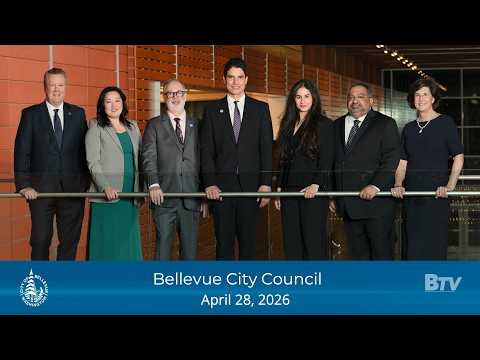
Bellevue council backs five-year plan to rebalance sewer rates
Summary
City officials directed staff to fold the Environmental Services Commission's five-year rate-equity recommendations into the utility rate proposals, shifting some costs away from multifamily fixed charges and phasing changes through 2031 while expanding bill-assistance options.
Bellevue City Council on May 4 directed staff to incorporate the Environmental Services Commission's recommendation to phase in sewer rate equity adjustments over five years, aiming to correct what staff said is an unintended subsidy from multifamily accounts to single-family and nonresidential customers.
Utilities Director Lucy Liu and staff outlined the analysis during a study session. "The goal is to make sure the sewer rates are fair for each type of customer," Liu said, describing a revenue-neutral effort to align rates with the cost of service across single-family, multifamily and nonresidential accounts.
The analysis presented by Deputy Director Scott Edwards and fiscal manager Matt Hobson found multifamily units are using substantially less indoor water than the billing assumptions used when rates were set decades ago. Scott Edwards said the shift has left multifamily customers paying more than their share: "By 2027, they're projected to pay about 123% of their share," he said. Staff showed options to transition equity over 3, 5 or 7 years; the commission voted to recommend the five-year approach as a balance between speed and bill impacts.
Matt Hobson illustrated likely bill effects for a typical single-family household: the current typical monthly sewer bill is about $109; under the preliminary 2027 projection the bill would be $119 before equity adjustments and $122 after the equity adjustment, a change Hobson attributed to both King County wholesale treatment cost increases and the equity reallocation. Hobson also noted staff expect overall annual rate adjustments in the 9%–11% range over the next several years driven largely by wholesale costs from King County.
Chair Sharon Juan of the Environmental Services Commission described the panel's deliberations and rationale for the 5-year plan, emphasizing affordability protections and monitoring. "The commission's 5-year recommendation takes a thoughtful, measured and forward-looking approach to rate setting," she said.
Council members pressed staff on affordability safeguards and program outreach. Staff said the city will continue and expand bill assistance: a long-term assistance program provides a 70% discount for qualified households (62+ or disabled), an emergency assistance program can cover up to four months of bills, and a "Neighbors Helping Neighbors" fund can waive up to two months when funds are available.
Deputy Mayor Dave Hamilton moved to direct staff to incorporate the commission's recommendations into the utility rates proposed during the fall budget process; the motion was seconded and passed on a voice vote with no opposition recorded. Staff will return to council during the budget process with the specific rate proposals and additional detail on bill-assistance options and monitoring.
The council also expects a King County presentation on wholesale treatment costs at an upcoming meeting (May 12), which staff said drives roughly two-thirds of the near-term rate pressure. The city plans to monitor revenue and usage and revisit the equity analysis periodically to avoid unexpected impacts.