Get Full Government Meeting Transcripts, Videos, & Alerts Forever!
Get email alerts on the Station Area Code Amendments topic
No spam. Unsubscribe anytime.
Kirkland planners recommend targeted 85th Street zoning changes, direct staff to protect projects already underway
Summary
The Planning Commission voted to recommend three narrow zoning code amendments for the North 85th Street station area—allowing development agreements to negotiate heights/uses, prohibiting certain low‑intensity residential types (including townhomes), and extending a temporary pioneer affordable‑housing provision to 2029—while directing staff to craft language that preserves projects already in progress and clarifies whether development agreements apply to parcels under 4 acres.
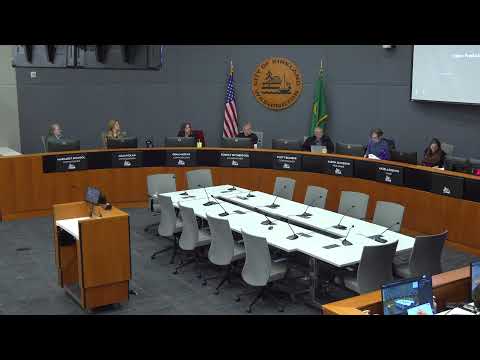
The Kirkland Planning Commission on (date not specified in transcript) recommended that the City Council adopt three targeted zoning-code amendments intended to catalyze development near the North 85th Street station.
In a staff presentation, planner Leandra Baker Lewis said the amendments respond to the 2044 comprehensive plan’s emphasis on focusing growth in urban centers and aim to improve the viability of transit‑oriented projects that support the city’s planned 2027 transportation investments. The three draft changes are: remove language that prevents development agreements from authorizing height or uses otherwise prohibited in a district; prohibit lower‑intensity residential types in the station-area regulating districts (detached and attached dwellings, certain middle‑housing types such as cottages, townhomes and multiplexes); and extend the cutoff date for the station‑area pioneer affordable‑housing provisions from 2025 to Dec. 31, 2029, while retaining a complimentary 624‑unit cap.
“By striking that language, those regulations would be allowed to be negotiated,” Lewis said in the presentation, describing how development agreements are an optional applicant‑initiated process that requires public review and council approval.
During public comment, Kim Faust, co‑president of Main Street Property Group, urged clarity that sub‑4‑acre parcels can apply for development agreements and asked for a narrow vesting or exemption to protect two near‑term projects (Slate Peak and Rosehill townhomes) that have substantial prior approvals. Faust said Slate Peak would include about 160–165 multifamily units and requested certainty so the project could pursue the deviations it needs, including additional height and adjusted commercial requirements.
“I think the draft code is too ambiguous on whether a sub‑4‑acre site can apply for a development agreement,” Faust said, asking the commission to make that explicit so her projects could proceed.
Several residents testified with opposing concerns. Susan Davis, a 22‑year neighborhood resident, said she supports some lower‑density housing but worried that broadened development‑agreement authority and vague “public benefit” language could enable much taller buildings and add traffic on 85th Avenue. “I really hope we could try to keep to the 80–85 foot height,” Davis said, expressing concern about very tall buildings along the corridor. Stanley Chu, a local real‑estate investor, urged incentives and predictability—such as additional FAR for projects providing affordable housing or being close to transit—to attract developers.
Commissioners asked staff whether the changes would block projects already under way. Staff replied that projects vested by a complete building‑permit application submitted before the amendments take effect would not be inherently prohibited, but unvested projects could be affected. Staff said the commission could direct language that specifically exempts or provides a surgical vesting pathway for projects already far along.
Vice Chair Erin Jacobson moved that the commission recommend the staff‑recommended code amendments to city council, and direct staff to amend the draft language to ensure projects already in progress are not stopped and to remove ambiguity on whether development agreements can apply to parcels smaller than four acres. Commissioners discussed the motion and added a recommendation urging stronger incentives to promote the kinds of higher‑density, transit‑supportive projects the city wants to attract.
The commission voted by voice; the motion carried. The commission’s recommendation, including the requested clarifying and protective language, will be forwarded to the City Council for further action.
What’s next: staff said it will draft revised code language reflecting the commission’s direction and include the requested vesting/exemption language tied to the commission’s intent; the council will receive the commission’s recommendation as part of the formal adoption process.