Get Full Government Meeting Transcripts, Videos, & Alerts Forever!
Get email alerts on the Community Engagement topic
No spam. Unsubscribe anytime.
Providence School Board adopts plan to gather community feedback on draft goals and guardrails
Summary
The Providence School Board approved a plan and presenter script to collect community feedback on draft student-outcome goals and guardrails, endorsing outreach by tagging onto existing meetings, a survey/QR link and online materials; the vote was by voice and no roll-call tally was recorded.
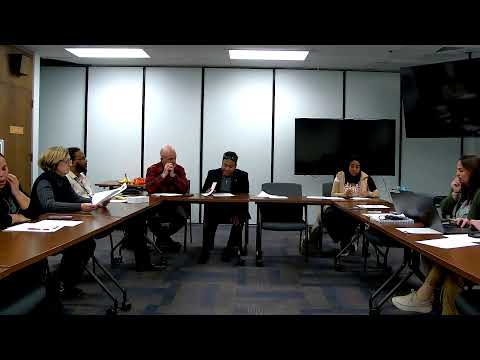
At a special meeting called to discuss community outreach on draft student-outcome goals, the Providence School Board voted to adopt a plan and a presenter script to gather public feedback before finalizing the goals and guardrails.
The board’s Presenter (S2) told members the draft goals and guardrails were developed after 19 community listening sessions and synthesis with external advisors, and that the purpose of the outreach is to “go back to our community and ask them if we got it right,” ensuring the goals reflect what families and community members said.
Board members discussed outreach strategies that include "tagging on" to existing community meetings (examples cited in the discussion included DWAC and the Community Advisory Council), a public-survey link delivered via a QR code on a flyer, social media posts, and making session notes and a synthesized summary available online. Secretary Potts (S1), who described logistical options, said the board would also use its regular board meeting as a forum for public comment and would prepare an "answer key" for presenters to explain the board’s role and the rationale behind the goals.
Several members emphasized practical limits and trade-offs of the proposed approach. One board member said tagging onto standing meetings can reach engaged groups but may not reach all neighborhoods, and stressed the need for active promotion and targeted outreach. The board also discussed Spanish-language outreach; Chair (S3) invited Spanish-speaking members to help craft translated scripts for Spanish-speaking audiences.
The draft presenter prompts that the board approved ask community members: (1) what the board’s role is and how it affects students; (2) whether the draft goals reflect themes heard in prior listening sessions (such as early literacy, college and career readiness, social-emotional development, and citizenship); and (3) how community partners can help advance those goals. The board agreed presenters should keep community sessions concise (roughly 20 minutes) and use the answer key to communicate distinctions between student-outcome goals and the guardrails that describe inputs and supports.
During discussion members agreed the handout (a visual flyer with the draft vision, goals and guardrails and a QR link to the survey) would be published and circulated but, as noted by legal/procedural counsel during the meeting, would not require a separate vote. Chair (S3) then called a motion to adopt the plan and the drafted script; the board approved the motion by voice vote after a second. The meeting record did not include a numerical roll-call tally; the chair declared the motion passed.
Next steps the board identified include finalizing the outreach plan and materials, holding the scheduled feedback sessions, publishing session notes and a synthesized summary online, and returning to the board with feedback prior to a planned December finalization of goals and guardrails.