Get Full Government Meeting Transcripts, Videos, & Alerts Forever!
Get email alerts on the Mine Action Gaza topic
No spam. Unsubscribe anytime.
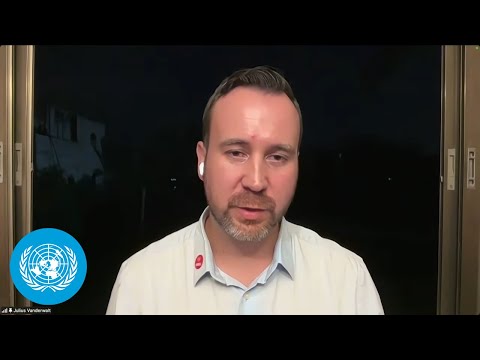
UN mine-action chief in Gaza warns explosive ordnance is widespread, urges international support
Summary
The United Nations Mine Action Service told journalists that explosive ordnance across Gaza and the West Bank is killing and maiming civilians, with children disproportionately affected; the agency said it has identified nearly 1,000 dangerous items, has about 28 EOD officers in Gaza, and is seeking expanded access and support to scale clearance.
Julius Novolt, chief of the mine action program for the United Nations Mine Action Service (UNMAS), told a press briefing from Gaza that explosive ordnance contamination is widespread and is preventing civilians from safely returning home or restarting livelihoods.
"We have already identified nearly 1000 dangerous items during missions requested by humanitarian partners only," Novolt said, adding that that "equates to encountering explosive device every 600 meters in Gaza's small geographic size." He said nearly half of the verified victims of explosive ordnance are children and that casualty figures are likely underreported. Novolt also referenced a Save the Children report, noting its finding that thousands of children were injured during the period the report covers.
Novolt framed mine action as essential to unlocking humanitarian activities. UNMAS conducts explosive-hazard assessments, escorts humanitarian convoys, provides routes guidance for medical teams and helps partners clear debris: "We worked closely with the World Food Programme to clear the debris safely and to reopen access along that specific route," he said, and described earlier work with the World Health Organization and Oxfam in Gaza.
But Novolt said UNMAS’s response is constrained by limited access, security conditions and equipment controls. He explained many detectors and demolition tools are treated as dual-use, subjecting them to greater scrutiny before they can be brought into Gaza. "What we need now is the space and the support to act," he said, urging the international community, member states and local authorities (including the Palestinian Authority and NCAC) to help establish coordination, safe storage and disposal channels.
In response to questions from journalists, Novolt said provenance of ordnance is often difficult to determine because items come from a mixture of sources, including historic stockpiles; he cited seeing ammunition manufactured in multiple countries. On personnel, he said UNMAS currently fields about 28 EOD officers in Gaza supporting humanitarian missions and that many rotate in from Amman via the LMB/Karam Shalom crossing on a visa-free, humanitarian rotation.
When asked how long it would take to clear Gaza if UNMAS received the requested support, Novolt said the agency has not found systematic minefields but instead described mostly spot tasks (individual unexploded ordnance or abandoned ammunition and items under rubble). He said full, comprehensive clearance will require building national capacity over the longer term rather than a short, territory-wide sweep.
The briefing closed with Novolt repeating an appeal for coordinated international support and safe access to scale mine-action activities; there were no formal decisions or operational commitments announced during the session.