Get Full Government Meeting Transcripts, Videos, & Alerts Forever!
Get email alerts on the Leaf Collection topic
No spam. Unsubscribe anytime.
Staff member outlines options to reshape Two Rivers leaf-collection program amid labor and budget strains
Summary
City staff described rising labor constraints, equipment repairs and program costs and presented options including a shorter collection window, bagging requirements for property owners, outsourcing, or targeted capital purchases; no formal action was taken.
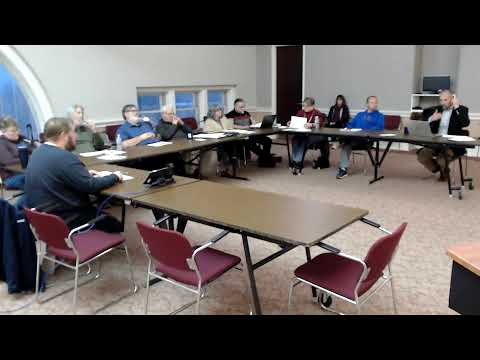
A staff member told a public meeting that the city’s leaf-collection program faces staffing shortages, equipment maintenance costs and budget pressure and outlined several options to reduce service or change how the program runs.
S1, identified in the transcript as a staff member, said the city currently allocates roughly 1,000 man-hours per year to leaf collection and that the program’s costs are distributed across funds. “We would need something like 19,500 bags, ranging the cost from roughly 50 cents to $1.50 a bag,” the staff member said when discussing a bagging requirement as one option. The staff member also cited past repair bills and annual maintenance figures, noting “we spent almost $18,000 in repair cost” for a recent period and that multi-year averages for equipment inspection and materials were on the order of thousands of dollars a year.
Why it matters: changes to the leaf-collection schedule or service model would affect residents’ chores, the city’s general fund and solid-waste operations. The staff member framed the discussion as a choice among shorter collection windows, requiring property owners to bag leaves, outsourcing the work to vendors or investing in different equipment.
Details of the options and costs
- Shorten collection window: Staff described models used in other communities — for example, limiting collection to a few weeks in November — and said shortening the window would reduce labor demands but shift responsibility to residents. “I’m encouraging property owners to mulch or compost the leaves on-site,” the staff member said.
- Bagging requirement: The staff member estimated a bagging program would require about 19,500 bags at roughly $0.50–$1.50 each, with a back-of-the-envelope bag cost near $40,000; the estimate was presented as a high-level calculation.
- Outsourcing: Vendors have expressed interest, the staff member said, but the city had not produced a complete cost estimate in the meeting. “If that was an avenue we wanted to explore, definitely… but knowing that there is an additional cost,” the staff member said.
- Capital purchases: The staff member said two pieces of equipment had been included in the capital improvement program as contingencies, and that staff had requested one item. A concrete CIP dollar figure was referenced in the discussion but not specified clearly in the transcript.
Operational and stormwater constraints
Staff described trade-offs in equipment choices: larger trucks may carry less leaf volume by density but can be more efficient for some operations, while rear-mounted or specialized front-mounted collection equipment has different labor and street-cleaning impacts. The staff member also emphasized that placement of leaves matters for stormwater credits, saying leaves must be placed on the terrace to qualify for stormwater management credit and that improper placement could forfeit those credits.
Budget context
The staff member referenced an ongoing shortfall on the solid-waste side, asking whether the roughly $103,100 deficit in that fund should be addressed and noting that splitting savings or costs across funds could lead to roughly $17,000 impacts on the general fund in staff calculations. The staff member emphasized the tension between budgeted amounts and available personnel to carry out the program.
What the meeting recorded and next steps
The transcript records discussion and options but no formal motion or vote on changing leaf collection. One attendee (S2) closed the discussion with a brief concluding remark. The staff member said additional analysis and budget detail would be needed before any change. No formal decision was recorded in the transcript.