Get Full Government Meeting Transcripts, Videos, & Alerts Forever!
Get email alerts on the Fire Budget Request topic
No spam. Unsubscribe anytime.
Berlin Fire Company asks town for $150,000 annual capital support as repairs and loan payments loom
Summary
At a April 20 work session, the Berlin Fire Company asked the Town of Berlin for $150,000 per year for capital and apparatus, outlined a continuing apparatus loan through the 2030s, and warned that deferred replacement cycles and high personnel costs limit fundraising capacity.
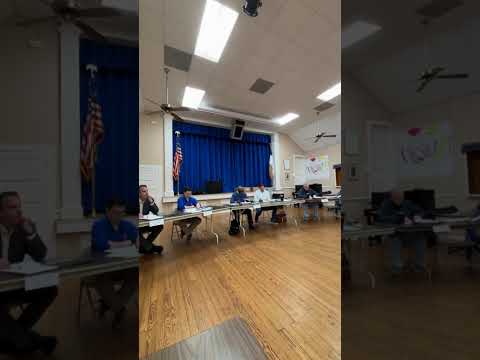
At a April 20, 2026 work session at Buckingham Church, David Fitzgerald, president of the Berlin Fire Company, urged the Town of Berlin to fund the department’s ongoing capital needs, saying, “Our request remains at a $150,000 per year for capital and apparatus.”
Fitzgerald and the fire chief (introduced at the meeting as Andy Grumman) told the council that building repairs, utilities and maintenance contracts are major drivers of the department’s operating budget. The presenters described recent capital work — including a replaced boiler and the need to remove and replace a 12‑inch‑thick concrete pad — and said those repairs, together with utilities and maintenance, increase annual costs.
The presenters summarized the department’s debt profile: annual apparatus loan payments of about $200,000 are expected to continue through the mid‑2030s, with a substantially smaller final payment reported at loan end. They asked the town to consider a $400,000 one‑time town payment to forward‑pay two upcoming obligations and to sustain replacement cycles. “We have an apparatus loan. They made $200,000 each year. That won't be paid off until 2037,” Fitzgerald said.
Council members pressed for clearer accounting and for the Fire Company to break out capital requests by line item and year so the public can see which items are deferred capital versus recurring needs. The mayor said including debt‑service details in the budget presentation would give a more holistic picture of the town’s fiscal commitments.
Presenters said personnel costs dominate EMS budgets — they reported roughly 91–92% of EMS budget dollars go to personnel — and cautioned that a temporary federal Medicare supplement that boosts some reimbursements is scheduled to expire on Dec. 31, 2027, which could reduce revenue tied to Medicare patients. The Fire Company also reported that roughly 25–30% of billing goes to collection or appeal, and that the department is setting aside funds for equipment replacement (ambulances are modeled on a 10‑year replacement cycle).
Council members asked for follow‑up details the Fire Company did not provide on the spot, including the number of volunteers with five or more years of service and a line‑by‑line breakout of capital requests for FY27. No formal vote or funding decision was recorded in the transcript; council members asked staff for additional information and signaled a desire for clearer multi‑year planning before committing one‑time funds.
What’s next: The Fire Company will supply a capital breakout and the council said it will consider the request as part of the broader FY27 budget process.