Get AI Briefings, Transcripts & Alerts on Local & National Government Meetings — Forever.
Cary Council approves expanded CDBG annual action plan, commits $5.3 million to housing programs
Summary
After hours of public testimony pressing for more affordable housing, the Cary Town Council adopted the 2026–27 Community Development Block Grant annual action plan with Option 2, increasing the award package to $5.3 million. The vote carried 5–1.
The Cary Town Council voted to adopt the town's 2026–27 Community Development Block Grant (CDBG) annual action plan with an expanded award package totaling $5,300,000, after an extended public hearing and council discussion.
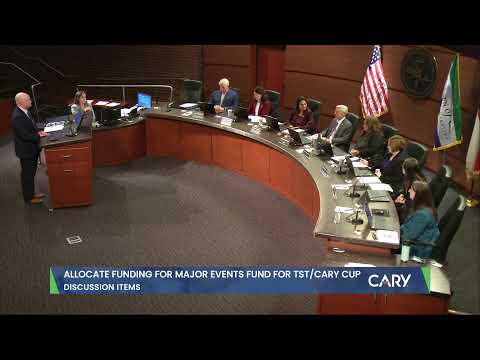
Councilmember Carissa Cohen Johnson moved to approve Option 2 — the larger funding package presented by staff — and Councilmember Sarika Bansal seconded. Mayor Harold Weinbrecht presided; the motion carried 5–1.
The adopted package combines $747,211 in current-year CDBG funds, $104,826 in prior unused CDBG funds, and a larger allocation of Cary general funds that together produce a $5.3 million awards package. Staff presented two funding scenarios during the public hearing: a base option that relied chiefly on federal CDBG money and a second option that added roughly $757,128 in local general-fund dollars to expand awards to more housing and stability programs.
Why it mattered: advocates and service providers urged the council to commit more local funds to preserve and expand affordable housing, citing rising construction costs and the threat of displacement. Mary Kintz of the One Wake strategy team told the council the need will outpace current funding and explicitly asked the council to consider Option 2. Multiple faith and nonprofit leaders described local programs that would use the funds to create or preserve units, provide repairs for low-income homeowners, and support emergency housing and senior services.
Council discussion balanced those appeals against fiscal concerns. Mayor Weinbrecht and some colleagues warned that additional general-fund allocations could increase the tax burden or require cuts elsewhere, including in public safety. Several councilmembers — including Carissa Cohen Johnson and Michelle Craig — framed the vote as fulfilling campaign and community commitments to affordable housing; Cohen Johnson said she was “very comfortable” prioritizing housing and was prepared to shift other budget items to avoid large tax increases.
What will be funded: staff recommended awards that include gap financing for the Greenwood Forest Baptist Church redevelopment to create 62 affordable units with supportive services; continued funding for Healthy Homes Cary home-repair grants; a Stable Homes Cary program to prevent displacement and administer utility assistance; a Raleigh Area Land Trust acquisition and rehab grant to secure one home for affordable ownership; support for White Oak Foundation emergency and senior housing programs; and nonprofit capacity-building grants.
Next steps: staff will incorporate the council’s action into the final annual action plan and submit it to the U.S. Department of Housing and Urban Development by the May 15 deadline. If HUD approves the plan, the town will move to implement the awards and disburse funds to partner organizations.
Quotes: “I would like to make a motion to approve option 2,” Councilmember Carissa Cohen Johnson said during the meeting. “This is one of the things I ran on.”
The Council approved the plan 5–1; the mayor cast the dissenting view in his discussion about fiscal tradeoffs. The approved plan leaves staff and partners with direction to implement the expanded awards if HUD accepts Cary’s submission.