Get AI Briefings, Transcripts & Alerts on Local & National Government Meetings — Forever.
Winchester planners review zoning overhaul to implement state's middle‑housing law and a parking overlay
Summary
Planning staff presented draft zoning amendments to align Winchester regulations with Public Act 25-1 — allowing middle housing in commercial zones, adding design standards and an optional traffic‑mitigation overlay to regulate parking; commissioners discussed boundaries, infrastructure capacity and mapping next steps.
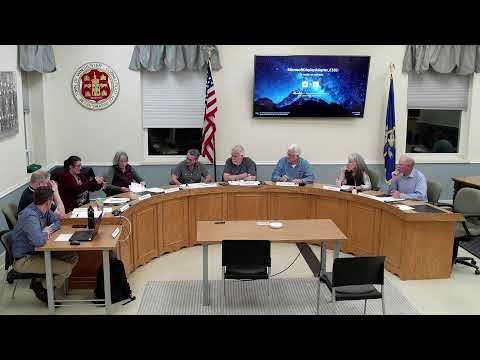
Planning staff presented a package of draft zoning amendments on April 27 intended to bring Winchester into compliance with Connecticut's Public Act 25‑1 and to provide local standards for middle housing and mixed‑use development.
The staff presenter explained the central changes: require permitting of middle‑housing building types (duplexes through small multifamily) in specified commercial zones, adopt parking minimums matched to the state formula (1 space for studios/one‑bedroom; 2 spaces for two‑bedroom and up), add design standards (lot coverage, roof pitch, façade materials) and offer the commission the option to create up to two traffic‑mitigation overlay zones (each up to 4% of town acreage) that allow the town to regulate parking for developments under 16 units.
"If a developer submits a parking needs assessment, the commission shall approve the development using either the figure found within the needs assessment or the minimum number of spaces, whichever is lower," the presenter said, summarizing the statutory framework. Commissioners asked how to frame an overlay map, whether to include the town center or more of the denser town‑single‑family neighborhoods, and how sewer and water capacity might limit where middle housing can be built.
Why it matters: Public Act 25‑1 requires communities to allow certain middle‑housing forms; Winchester's draft adds local design controls and gives the commission a limited tool (traffic‑mitigation overlay) to regulate parking in areas where narrow streets and limited on‑street capacity create safety and circulation concerns.
Next steps: Staff asked commissioners to submit street names and comments so staff can refine an overlay map and circulate a redline. The commission agreed to review written comments and maps before scheduling any public hearing on the regulation package.