Get Full Government Meeting Transcripts, Videos, & Alerts Forever!
Get email alerts on the Edtech Policy topic
No spam. Unsubscribe anytime.
Board adopts changes to WASDA AI platform positions, emphasizing guardrails and student protections
Summary
The Edmonds School District board approved suggested changes to WASDA's platform language on artificial intelligence, stressing student-data privacy, preserving student-facing instruction and calling for regulatory guardrails; student speakers urged caution and suggested paper assignments as one tool.
The Edmonds School District board voted to submit revised platform positions on artificial intelligence to WASDA for consideration at the association’s legislative conference.
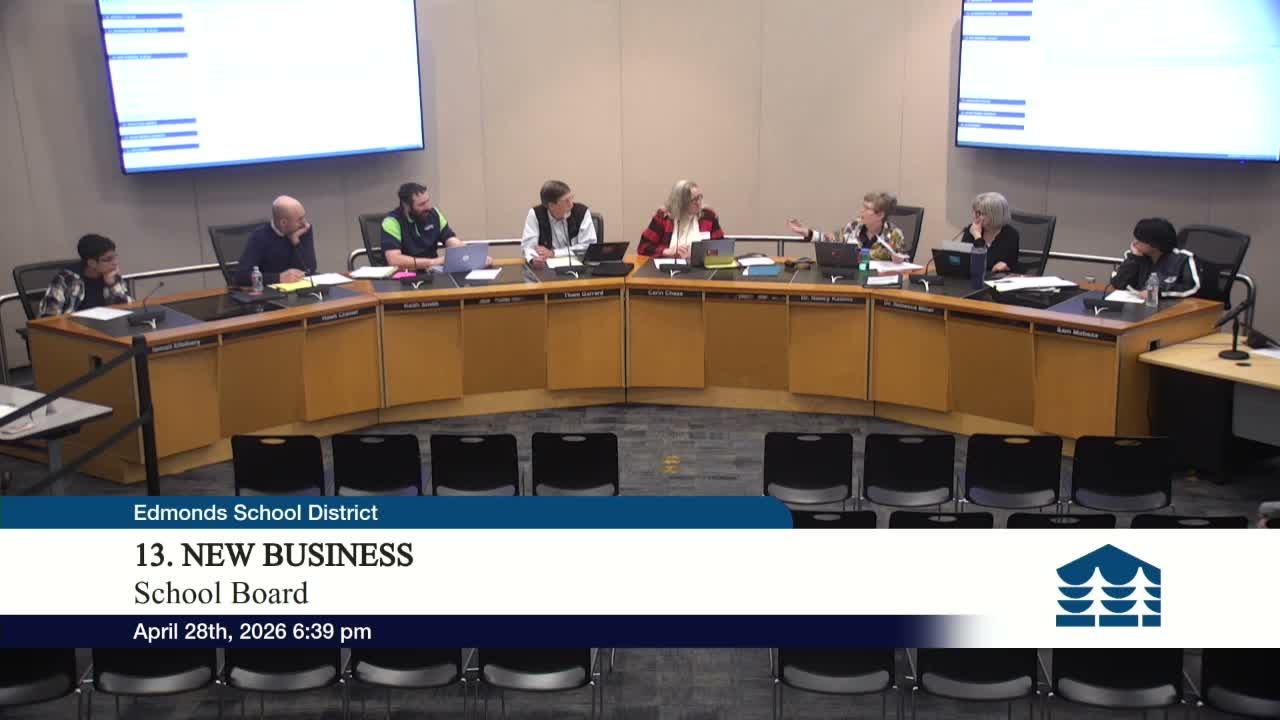
Directors Gerard and Kramer presented proposed language emphasizing the need to protect student data privacy, ensure AI does not replace student-facing instructional work, promote critical-thinking skills and minimize environmental impacts of technology. Director Chase moved to adopt the suggested changes and submit them by the April 30 deadline; the motion passed by voice vote.
Student speakers addressed the board during the discussion. Tatiana, a student from Edmonds Heights, said AI’s broad availability can reduce students’ motivation to think independently and suggested increasing paper assignments and in-class tutoring as alternatives to relying on AI tools. Another student, Sam, said laws and regulations on AI lag behind the technology and urged caution before broad implementation in schools.
Board members voiced support for adopting guardrails and communicating the district’s concerns to WASDA. The submission is intended to shape WASDA’s advocacy and model positions that the board hopes will guide future state-level legislation and district practice.