Get AI Briefings, Transcripts & Alerts on Local & National Government Meetings — Forever.
County leaders pitch careers, internships and growth at Fairfield County student summit
Summary
County officials, municipal leaders and partner organizations addressed students about county operations, careers in public service and internships; the day included a mock council, a Q&A with a senator's regional director and a presentation on planning and public‑works needs.
County leaders and community partners used a student leadership summit at the Fairfield County Administration building to introduce career paths, internships and local government functions to high‑school seniors.
Jean Stevens, Fairfield County’s public information officer, opened the program and described the county’s communications work and an upcoming internship program that will place students in departments including finance and public works. Stevens said the county employs about 300 full‑time staff and works with 15 media partners to promote county initiatives.
Deputy Administrator Jonathan Burrows urged students to develop practical skills and mentors, and noted public works maintains roughly 212 miles of county roads. ‘‘Every day is different,’’ Burrows told students, describing the mix of meetings, employee issues and citizen complaints that administrators handle during budget season.
Vic Carpenter, the county administrator, framed local government as problem solving and encouraged communication skills over credentials: ‘‘If you can solve problems, if you can communicate, if you show the ability to learn, that's really all you need to do,’’ he said.
Community development staff explained planning and zoning processes, including that planning commissioners and board of zoning appeals members are volunteers serving three‑year terms and that the county reviews large subdivision proposals; the presenter cited an illustrative projection that Fairfield might add roughly 25,000 residents over the next decade and said planning for water, sewer and roads will be necessary.
Brad Douglas, chief deputy with the sheriff’s office, described law‑enforcement divisions and entry requirements and said the state pays for the police academy: ‘‘The county does not pay for it…this is paid for through the state government and when traffic tickets are issued…portion of that goes toward the academy,’’ he said. Douglas also urged careful use of social media, noting online posts can affect hiring.
Demetrius Chapman, mayor of Winnsboro, told students his town has pursued annexations to attract development, described municipal utility operations and emphasized constituent communication. Stacy Hare, president of the Fairfield County Chamber of Commerce, highlighted tourism assets such as local lakes, a mountain‑bike park and the Railroad Museum and said the Chamber is working with federal offices (including the senator’s office) to resolve accessibility issues at the local post office for seniors.
Courtney Jackson, regional director in U.S. Senator Tim Scott’s office, explained constituent casework the office handles (postal service, Social Security, IRS issues), described her regional oversight of several counties including Fairfield, and outlined unpaid internship opportunities for college students; she encouraged students to apply via the office website.
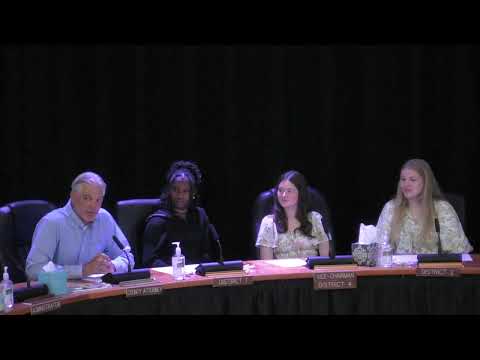
The day included a mock county council led by Clerk Kim Roberts in which students learned Robert’s Rules, how readings and votes work and why minutes and public records matter. During the mock meeting, two proposed ordinances (a student‑uniform mandate and a 4‑day, 8 a.m.–5 p.m. school week) were debated and did not pass in the exercise: the uniforms ordinance failed for lack of a second, and the four‑day proposal received a second but failed on the vote.
Don Goldbach, an elected council member, told students that fiscal oversight motivated him to run for office after the county announced it owed the IRS $1.4 million because tax forms had not been filed on time; he said he reviews monthly budget reports to track spending. The county also announced a draft strategic plan created from six community sessions; staff said council will consider adopting the plan at a future meeting.
Organizers closed by inviting students to take a group photo and providing lunch.