Get Full Government Meeting Transcripts, Videos, & Alerts Forever!
Get email alerts on the K 12 Education Budget topic
No spam. Unsubscribe anytime.
South River board proposes $65.12 million 2026–27 budget; taps expiring "bank cap" and plans modest tax increase
Summary
The South River Board of Education unveiled a $65,124,374 tentative budget for 2026–27 that relies on expiring "bank cap," uses grants to fill part of an $8 million adequacy gap and would raise taxes on the average assessed home roughly $39.61 per month; the board will vote April 30.
The South River Board of Education presented a $65,124,374 tentative budget for the 2026–27 school year that would rely on expiring "bank cap" funds, sustain current staff and programs, and raise taxes on an average assessed household by about $39.61 per month, officials said.
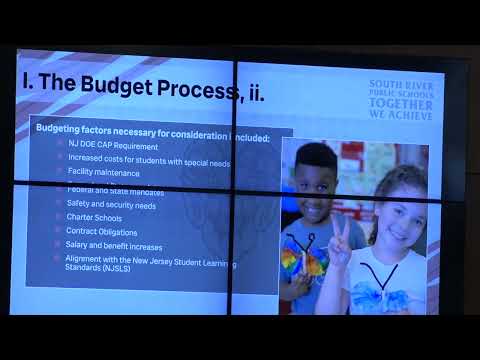
Superintendent Dr. Zirchir, who led the presentation, said the budget was developed over months with administration, the finance committee and stakeholders and is organized in three parts: the process used to build the budget, new initiatives for 2026–27, and the financial technicals to be reviewed by the business administrator.
The budget prioritizes keeping class sizes and instructional programs intact, maintaining mental-health supports and safety measures, and preserving staffing levels. Dr. Zirchir said the district is using partnerships with county co-ops to lower procurement costs and noted planned additions such as a primary-school mental-health clinician, an extra custodian for the preschool annex and continued evening security officers.
Officials said the district will fund several new academic and student-support items in 2026–27, including reinstating cursive instruction, adopting a Generation Genius curriculum for math and science, subsidizing instrument rentals for students who cannot afford them, and deploying device-management pouches to comply with new state law. Facility and safety projects include added bleachers at Denny Stadium, parking and sidewalk repairs and gym painting.
Business administrator Mr. Rosa outlined revenue sources supporting the proposal—audited surplus, local tax levy (including health-care and bank-cap adjustments), state aid, preschool aid, anticipated federal funds, Medicaid reimbursements, activity accounts and reserve withdrawals—and presented the $65,124,374 total. He said the district expects a roughly $39.61 monthly increase for an average-assessed household ($293,682), about $118.83 quarterly, based on current ratables.
Dr. Zirchir explained the district will tap remaining "bank cap" (unused tax levy increases carried forward from prior years) to balance the 2026–27 budget. She said the district has been banking cap since 2021 when levy increases were held at 0% and that much of the remaining banked capacity must be exhausted this year.
Using the state's definition of funding adequacy, Dr. Zirchir said South River should have about $59,000,000 to educate its students but currently has approximately $51,000,000 in state aid and local levy, creating an estimated $8,000,000 shortfall. She said grants and other outside revenues make up nearly $4,000,000 of that gap but noted grant conditions limit flexibility.
Mr. Rosa also reported progress on debt reduction: bond payments tied to a 2020 referendum for the primary school are largely paid down and are expected to finish in the coming budget cycle. The district holds a $1,700,000 capital reserve and a $500,000 maintenance reserve, officials said.
Enrollment figures presented to the board showed a modest overall increase and program-level shifts: total enrollment rose about 1.26% (est.), special-education enrollment decreased roughly 2.66% (projected), English-language learners were cited at about 565 students (roughly 20% of the population) and free-and-reduced-lunch participation stood at 53.27%.
Board members praised the administration and finance committee for keeping staff and programs intact despite limited state-aid growth, and they discussed the role of the federal 21st Century grant in funding after-school and athletic offerings. Dr. Zirchir said the grant funds many extracurricular programs but carries programmatic restrictions.
The presentation concluded with a reminder that the tentative budget and slides will be posted on the district website and that the board will take action at its regular meeting on Thursday, April 30. The public was invited to comment and the board opened the floor for questions.
Other business at the special hearing included a public request for portable restroom access near the middle/elementary fields; district staff noted logistical and vandalism challenges at the new turf field and said they will continue exploring secure placement and service options.
The board adjourned the special hearing after a motion by Vice President Nielsen and a second by Mrs. Hrabowski. The formal budget vote is scheduled for the board's April 30 meeting.