Get AI Briefings, Transcripts & Alerts on Local & National Government Meetings — Forever.
Yarmouth library borrowing proposal falls short of two‑thirds requirement after lengthy debate
Summary
Town Meeting rejected a $35.7 million borrowing authorization for a new library after extended presentations on a state grant (about $13.44 million), 20‑year debt impacts, and many residents’ questions about timing and tax burden; the standing count was 314 yes, 177 no, below the two‑thirds threshold required for the borrowing motion.
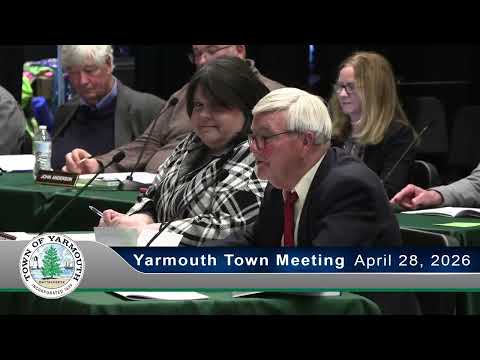
The Town of Yarmouth’s proposal to borrow $35,706,091 for a new library — contingent on a debt‑exclusion ballot question — did not receive the supermajority required at the April 28 Town Meeting.
The Library Building Committee chair Judy Connors Tarver and the town’s library director, David Aronson, presented the project as a years‑long effort to replace undersized and accessibility‑challenged facilities. They said the town received a Massachusetts Board of Library Commissioners grant award of $13,438,478 (plus an additional $403,001.54 contingent on meeting energy incentives), representing roughly 38% of eligible construction costs, and urged timely action to accept state funds that could be reallocated to other communities if not accepted.
Town Administrator Robert Rittenauer laid out the broader capital context: the proposed library is one of several high‑cost projects in a 10‑year plan (new elementary school, wastewater Phase 2, Bayberry Hills discharge work, and a potential fire station). He and consultants presented a debt schedule showing a 20‑year payback with estimated average taxpayer impacts (roughly $8–$10 per month initially under the base scenario; lower if a $2.5 million private fundraising goal is met). The town also discussed a residential‑exemption strategy to shift some of the tax burden away from year‑round residential taxpayers.
Speakers for and against the project packed the discussion. Supporters stressed rising library usage, programming needs, accessibility, and the value of accepting a sizeable state grant now to avoid higher future construction costs. Opponents called the project too expensive given other capital priorities—particularly the town’s sewer and school projects—and expressed concern about long‑term debt levels and the absence of a mechanism to limit the borrowing to a short‑term spike (no sunset on a debt exclusion). The Finance Committee and a split Select Board recorded concerns about the cumulative debt load and prioritized projects differently.
At the standing count for the Article 15 borrowing motion, tellers reported 314 votes in favor and 177 opposed. The motion required a two‑thirds majority for the borrowing authorization; the vote did not meet that threshold and the motion failed.