Get AI Briefings, Transcripts & Alerts on Local & National Government Meetings — Forever.
Larimer County officials weigh local tobacco retail license to curb youth vaping
Summary
County health staff told the Board of County Commissioners that youth nicotine use in Larimer County is higher than state and national averages and urged exploring a local tobacco retail licensing program to strengthen compliance, local enforcement and limits on flavored products; staff will convene stakeholders and return with an update in 90–120 days.
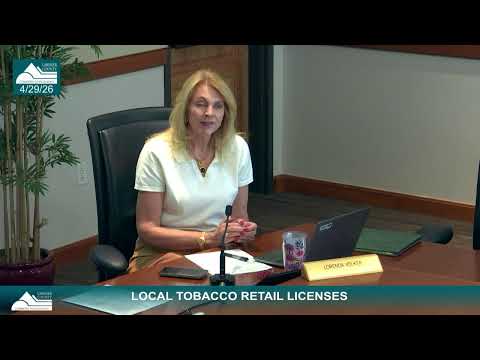
Larimer County public‑health officials on April 29 urged the Board of County Commissioners to pursue a local tobacco retail license to reduce youth access to nicotine products and improve enforcement where state oversight falls short.
Tom Gonzales, director of public health and environment for Larimer County, told the board the discussion is part of “policy development and support” and framed youth nicotine use as a public‑health concern. Gonzales said the health department will convene stakeholders and report back to the board with an update in about 90–120 days.
Why it matters: Presenters said Larimer County’s youth vaping and tobacco metrics exceed state and national rates, and retail access remains a major pathway for underage users. “Four out of five youth who tried to buy a cigarette or nicotine product were not refused due to their age,” said Talia Hirsch, the health department’s strategic planning, health equity and partnerships program manager, citing the department’s survey findings. Kimberly Baker, health and all‑policies coordinator, said roughly 53% of stores in unincorporated Larimer County had at least one sales‑to‑minor violation in the last three years.
What the proposal would do: Staff outlined common elements of local tobacco retail licenses used elsewhere in Colorado: annual, nontransferable licenses for retail outlets; a graduated penalty structure including suspensions and revocations; a local schedule of compliance checks; limits on exterior promotion and price‑promotions; distance limits from youth‑serving sites (examples discussed included a 500‑foot standard); and optional prohibitions on flavored tobacco products or prohibiting pharmacies from selling tobacco. Baker said local fees could be set to self‑fund enforcement and education.
Enforcement and implementation questions: The county currently forwards sales‑to‑minor complaints to the Colorado Department of Revenue, which performs state compliance checks. County staff told commissioners they rarely receive follow‑up from the department and therefore cannot locally recheck or enforce unless a local ordinance creates that authority. Gonzales said the department has environmental‑health staff with relevant inspection experience and that an intergovernmental agreement (IGA) could assign issuance and enforcement responsibilities.
Officials offered examples: Loveland has a local TRL (passed in 2021 and amended in 2025) that raised the minimum sales age and set a 500‑foot standard from youth‑populated areas; Fort Collins is actively developing similar language; Glenwood Springs and Golden were cited as case studies where local policy changes did not force expected business closures and, in some cases, coincided with stronger municipal revenues.
Concerns from the board: Commissioners asked about fee amounts, staffing and business impacts. Larimer County Clerk and Recorder Tina Harrison said her office has not completed a time‑and‑staffing analysis and estimated roughly an 18‑month lead time if the clerk’s office were responsible for licensing administration. Several commissioners supported moving forward but asked staff to return with cost‑benefit comparisons for enforcement by law enforcement versus the health department, and with options to align language and fees with neighboring municipalities.
Next step: Staff committed to convening stakeholders — including municipalities, the clerk’s office, law enforcement and business representatives — and to provide an update to the board in late July or early August. Chair Jody Shiley McNally closed the session by thanking staff and attendees and adjourning the meeting.
"We will provide back... in July, early August, and provide an update on where we're at in the process," Gonzales said. Commissioner Kefalas said he supported moving forward if staff can clarify timeline and cost tradeoffs.
Authorities referenced in the presentation included a 2020 state law establishing tobacco retail licensing (referred to in the presentation as a House bill), the Department of Revenue’s enforcement authority, and local ordinances such as Loveland’s TRL. The health department also cited the Healthy Kids Colorado survey when discussing youth use rates.
The county did not take any formal action or vote at the work session; staff were directed to begin stakeholder engagement and return with an implementation update.