Get AI Briefings, Transcripts & Alerts on Local & National Government Meetings — Forever.
Turtle Mountain leaders press state for restored data-sharing as syphilis rates climb
Summary
Tribal public-health officials told a legislative committee that negotiations with the state over a data‑use agreement have stalled since 2022, hampering local responses to rising syphilis and other STI rates; lawmakers pledged to follow up.
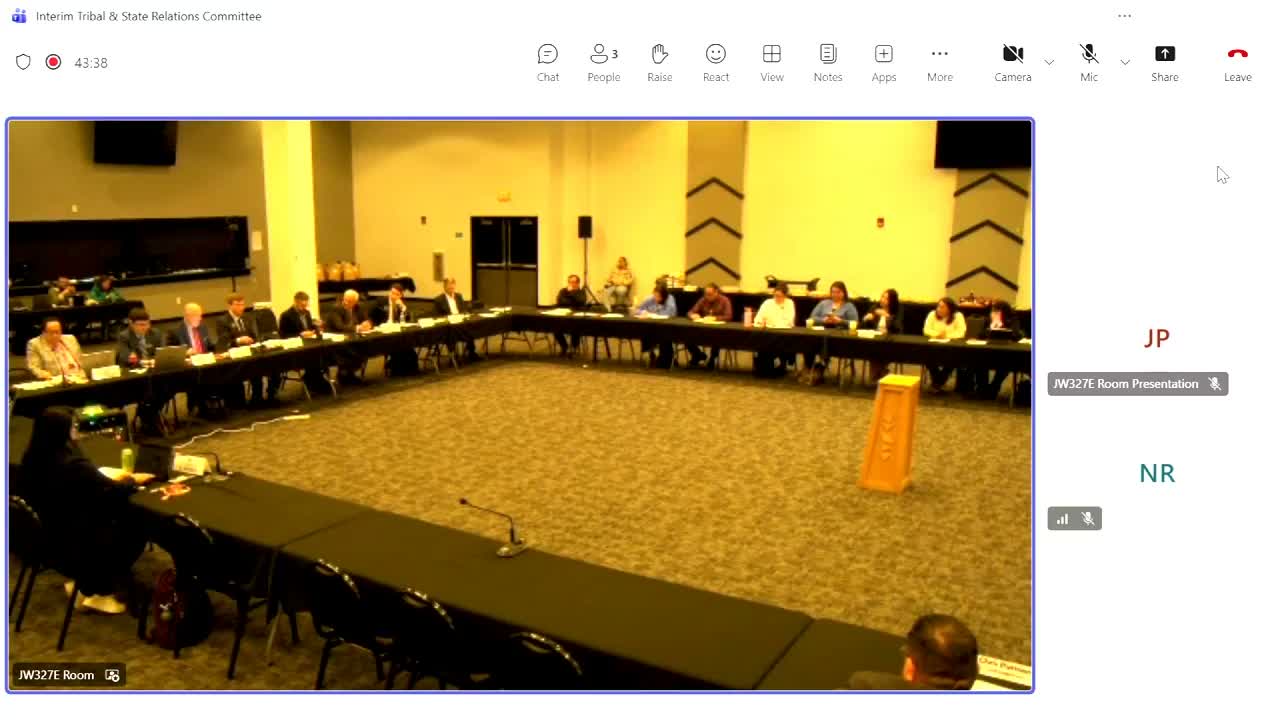
Turtle Mountain public‑health officials told members of the North Dakota interim legislative Committee on Tribal Affairs on April 22 that delays in reestablishing a data‑use agreement with the state are slowing local disease surveillance and response.
"Right now, the syphilis rates in Rolette County are the highest in the state," said Stephanie Jay, who identified herself as a Turtle Mountain Public Health Department official. Jay said the tribe and state had a pandemic‑era data agreement that allowed the tribe to perform daily contact tracing and case management; that agreement ended when the public‑health emergency ended and a new arrangement has been under negotiation since 2022.
Jay told the committee the state has asked for the tribe’s enrollment list and other details that tribal leaders are reluctant to provide. She said the alternative—having a state field epidemiologist assigned from Grand Forks County—creates long delays: "That field epidemiologist ... is three hours away and has five counties that person is covering," Jay said, describing outreach attempts that can take weeks or months.
Committee members pressed officials on logistics and jurisdiction. Representative Jamie Davis and others asked whether Standing Rock and other tribes had secured comparable agreements; Turtle Mountain staff said some tribes have been able to negotiate county‑level or state agreements but that Rolette County’s mix of five ZIP codes and a highly mixed population has complicated negotiations.
Lawmakers said they would try to help. Chairman Hawley told Jay and tribal leaders he planned to look into department contacts and "have some homework" to report back. The committee scheduled follow‑up at its May meeting in Spirit Lake and requested the Department of Health and Human Services join that session to describe implementation needs and timelines.
Why it matters: tribal public‑health units argue that timely local access to surveillance data can reduce mortality and outbreaks, as it did for the tribe during COVID. Jay and other presenters urged a data‑use arrangement that preserves tribal sovereignty while enabling rapid case finding and culturally appropriate interventions.
The committee did not adopt formal policy at the meeting; members asked staff to seek additional details from state public‑health officials and to return to the topic at the next interim meeting.