Get AI Briefings, Transcripts & Alerts on Local & National Government Meetings — Forever.
Officials mark 30 years of the Balcones Canyonlands Conservation Plan, outline renewal and visitor center plans
Summary
City and county officials marked the Balcones Canyonlands Conservation Plan's 30th anniversary, highlighted species and cave protections secured under the plan, and described a multiyear permit renewal that will update science, public engagement and compliance. Travis County also previewed a visitor center expected to open in 2028.
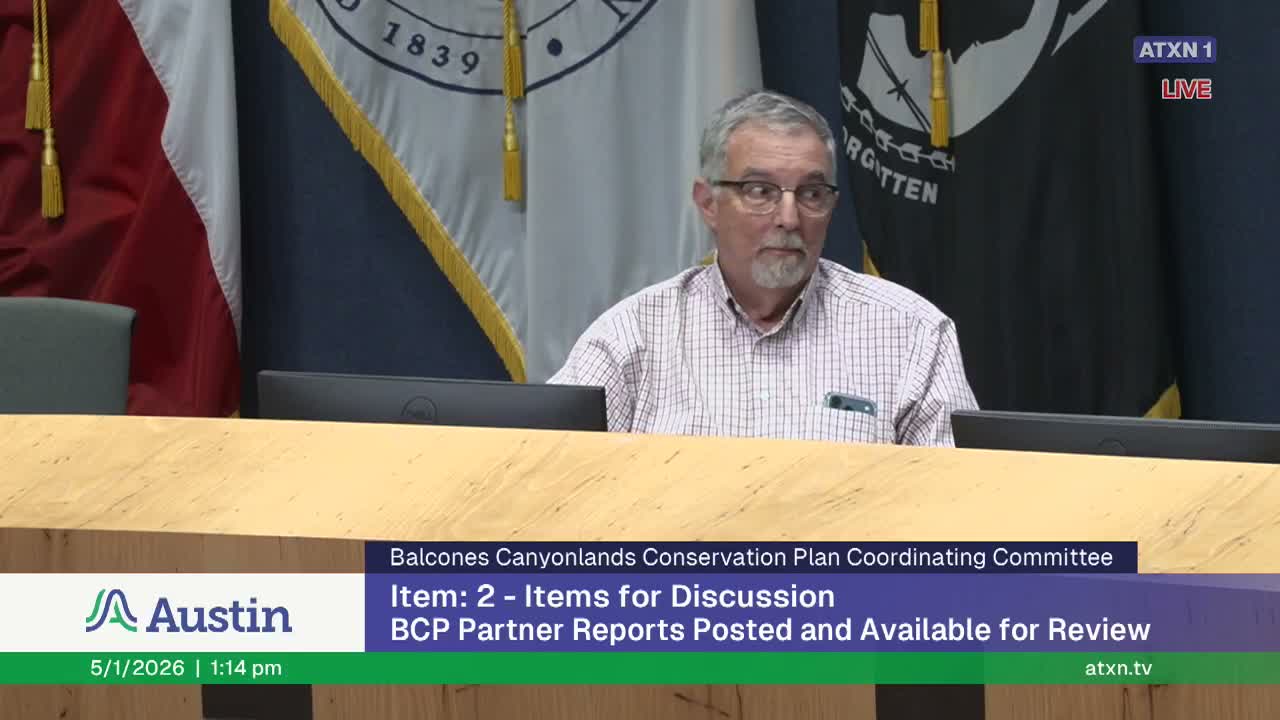
City Council member Paige Ellis and Travis County representatives on Friday celebrated the 30th anniversary of the Balcones Canyonlands Conservation Plan (BCCP), described ecological gains the plan has delivered and outlined a multiyear renewal process that officials said will modernize permitting and strengthen species recovery targets.
The BCCP, first signed in 1996 after years of negotiation and local activism, pairs a regional habitat conservation plan with an incidental take permit under Section 10 of the Endangered Species Act. Kimberly Harvey, the BCCP secretary, told the coordinating committee the plan initially required protection of core habitat—including 28,428 acres for golden‑cheeked warbler habitat and 2,000 acres for the black‑capped vireo—and management of roughly 62 named caves and numerous rare plants and invertebrates.
"This program exists because of the people who believed in the vision early on," Harvey said, crediting decades of collaboration among agency partners, landowners, scientists and community volunteers.
Travis County assistant director of natural resources Jeremy Hull described species gains and site work the plan supported. Hull highlighted long‑term surveys showing black‑capped vireo counts rising from 13 confirmed individuals across nine territories in 2006 to 73 individuals across 57 territories in 2025. He also described restoration work at Midnight Cave in which staff and volunteers removed years of trash over a six‑year effort, a project officials said has helped species recolonize restored cave habitat.
Officials said the preserve system now exceeds the original minimums: partners collectively manage more than 33,000 acres and 62 caves, and the BCCP has issued permits to more than 1,500 private landowners and more than 400 public infrastructure projects since its inception. Harvey and Olivia Lopez, the City of Austin environmental conservation program manager, emphasized that active, ongoing management—not simply land acquisition—is required to maintain habitat for species with differing needs.
Looking ahead, Harvey outlined the renewal process for the BCCP permit. Because amendments or renewals constitute a new U.S. Fish and Wildlife Service decision, the application must satisfy current regulations and use the best available scientific data. The planned renewal is a multiyear effort with distinct phases: consultant procurement; aligning science, policy and stakeholder input; drafting and effect analysis; federal NEPA review and public comment; and finalization and local approvals prior to federal submission. Harvey said staff hope to execute a consultant contract in the coming months and will use workshops, meetings, surveys and targeted outreach to gather input.
Travis County also previewed a proposed Balcones Canyonlands Preserve visitor center: a three‑story, roughly 60,000‑square‑foot facility on a 93‑acre site near State Highway 620 adjacent to BCP land. Officials said the center will include exhibits, an ADA‑accessible trail network, an amphitheater and office space for natural resources staff, and is expected to open in 2028.
Ellis noted the city and county will host a small reception after the meeting to display proclamations designating May 2, 2026, as Endangered Species Conservation Day and invited attendees to share stories. Before the presentation, the committee unanimously approved the record of decisions for the Nov. 14, 2025 meeting (motion by Commissioner Shay; seconded by Council member Paige Ellis). The committee adjourned at 1:53 p.m.