Get Full Government Meeting Transcripts, Videos, & Alerts Forever!
Get email alerts on the Behavioral Health topic
No spam. Unsubscribe anytime.
Regional behavioral-health authority details services for Kaufman County, requests updated MOU and local match
Summary
A North Texas Behavioral Health Authority representative told Kaufman County commissioners the agency now operates hundreds of programs across the region, listed services available locally and requested the county’s renewed memorandum of understanding and a local match estimated at roughly $216,000–$217,000 toward an approximate $449,000 annual share of program matches.
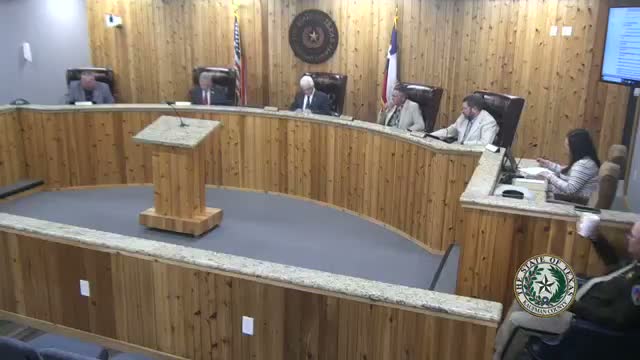
A representative of the North Texas Behavioral Health Authority (NTBHA) told the Kaufman County Commissioners Court on March 31 that the authority has greatly expanded services to outlying counties and is seeking updated local commitments and a new memorandum of understanding.
NTBHA’s speaker said the authority has grown from an $80,000 budget eight years ago to what she described as a $175,000,000 regional budget and supports “about 75 independently operating programs” funded through roughly 38–39 different programs. She said unduplicated people served in Kaufman County in January 2026 numbered 2,061 and that Kaufman’s share of required matching funds across the system would be about $449,000 a year; NTBHA staff told the court they were currently asking Kaufman County for roughly $216,000–$217,000 “in match.”
“Pretty much we say if we can get the money we’re gonna figure out how to make those services happen,” the NTBHA representative said, describing grants from state and federal sources and a large HHSC contract. The presenter described program types available in Kaufman County—crisis and mobile outreach, jail assessments, transition supports for people leaving state hospitals, substance-use disorder services, peer-led programs, and telehealth options—and named several local partners including Lakes Regional, Homeward Bound, Child and Family Guidance Center and Valiant Behavioral Health.
Nancy Blum, introduced by NTBHA staff as the authority’s chief clinical officer for the non-Dallas counties, gave operational details: the “living room” crisis diversion operates 8 a.m.–5 p.m., the police drop‑off program runs until 7 p.m. and on Saturdays, and NTBHA maintains a 24/7 hotline for crisis triage. Blum and the NTBHA presenter described recent rural-focused grant awards that fund youth crisis outreach and mobile crisis teams available to Kaufman County residents.
Sheriff (identified in the transcript as the county sheriff) pressed NTBHA staff on follow‑up and reporting: he said the county refers people to NTBHA frequently but receives few reports confirming follow-up or engagement. “I need just a response back saying, hey, we went out there and talked to them…we’ve done — I don’t care what services — but all we’ve said is it’s been handled,” the sheriff said, asking for acknowledgement that referrals were addressed. NTBHA staff agreed to pursue better communication and to request a legal opinion about how much information they can provide while observing HIPAA constraints.
Judge Allen and county staff said they will schedule a follow-up meeting in the next two to three weeks to review the materials more closely and to work on a new MOU; the judge also asked county attorneys to prepare a new MOU for the year.
Why it matters: NTBHA’s presentation identified the local footprint of state and regional behavioral‑health programs and quantified needed local match dollars for the operating year. The request for an updated MOU and clearer follow-up on referrals could affect the county’s FY budget planning and how sheriff’s office referrals are tracked.
Next steps: NTBHA and county staff agreed to follow up in the judge’s office within weeks to review the presenter’s packet and to have county attorneys prepare a new MOU.