Get Full Government Meeting Transcripts, Videos, & Alerts Forever!
Get email alerts on the Public Safety topic
No spam. Unsubscribe anytime.
Johnson County adopts temporary ban on outdoor burning amid dry conditions
Summary
Johnson County Commissioners unanimously approved a prohibition on outdoor burning beginning Jan. 20, citing a recent surge in grass fires and elevated fuel‑dryness indices. Fire Marshal Marshall Moore recommended the measure to protect limited county firefighting resources.
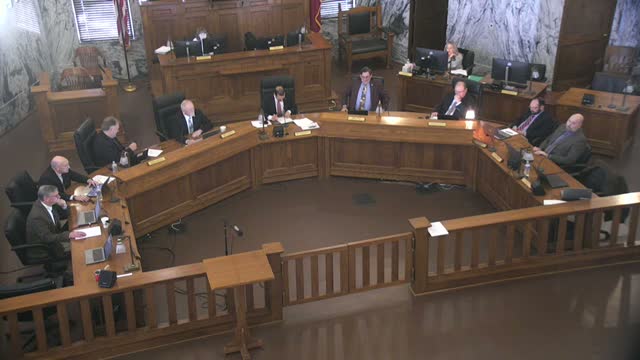
The Johnson County Commissioners Court voted unanimously on Jan. 12 to adopt a temporary prohibition on outdoor burning after being briefed on recent fire activity and dry conditions.
"We had come off of 2 days of having over 20 grass fires across the county," Fire Marshal Marshall Moore told the court, describing stretched resources and pockets of high KDBI fuel readings that increased the risk of larger fire incidents. Moore recommended implementing restrictions starting Jan. 20 at 12:01 a.m., allowing several days of cooler weather for residents to address existing fires and giving the county time to publicize the burn ban.
Commissioners discussed forecasted warming into the 70s the following week and noted that wind coupled with dry fuels could rapidly escalate small ignitions. The judge and commissioners unanimously adopted the prohibition order as presented and asked staff to publicize the restriction and any permitted prescribed burns conducted with appropriate permits.
The court noted an upcoming 500‑acre prescribed burn west of Cleburne and advised the public that permitted burns by state agencies would still occur with notice. The order was adopted without recorded opposition; the court instructed emergency management and communications to coordinate public notices and updates if weather forecasts change.
The prohibition was described by the county as a near‑term public‑safety measure tied to observed burning activity and fuel dryness; the court indicated it would reassess the need for continued restrictions as conditions and forecasts evolve.