Get AI Briefings, Transcripts & Alerts on Local & National Government Meetings — Forever.
Johnson County court urges statewide guardrails on data centers after lengthy public debate
Summary
After hours of public comment, Johnson County Commissioners Court unanimously approved a nonbinding resolution asking the Texas Legislature to require transparent reporting, independent impact studies and limits on water‑intensive cooling systems for large data centers.
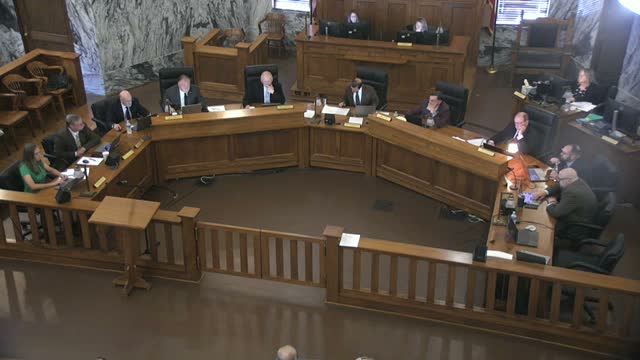
Johnson County Commissioners Court on April 13 unanimously adopted a nonbinding resolution asking the Texas Legislature and state agencies to adopt enforceable safeguards for large data‑center projects, including requirements for transparent reporting of projected electricity demand and water usage and independent impact analyses of grid and water supply implications.
Supporters of the resolution emphasized the need for local clarity before hyperscale facilities are sited. Mark Hayes, a data‑center contractor who said he has built facilities nationwide, urged the court to adopt standards that both attract investment and limit environmental impacts: "We need to get ahead of it when it comes to rules, regulations, and covenants so that it's built correctly," he said. Eddie Pollock, a third‑generation well driller, warned of falling water tables and told the court groundwater volumes have declined sharply over decades: "We're gonna run out even without data centers going in," he said.
State Representative Helen Kerwin, who attended the meeting, told the court she supports "guardrails" to balance economic growth and resource protection: "We all support growth, but we want to know that it will not come at the expense of the resources that make our district strong," she said, urging transparency and early engagement with landowners.
The resolution — labeled 2026‑08 on the agenda and discussed at length — criticizes the use of open‑loop evaporative cooling (which consumes large volumes of potable water), urges closed‑loop or water‑efficient cooling alternatives, and calls for the legislature to designate the issue as an interim study priority. It also requests options that could give counties limited tools to assess infrastructure and resource impacts tied to hyperscale developments.
Commissioners repeatedly noted the limits of county authority over projects sited under state permitting, and several members said the resolution is primarily a vehicle to push for state action. One commissioner voiced concern that tax incentives already granted at the state level tilt the economics in favor of new centers; another said the county will not be able to stop projects outright but can press for transparency and safeguards.
The resolution passed unanimously after the court heard three public commenters and an extended staff and commissioner exchange about grid reliability, lithium‑battery storage risks, wastewater contaminants, tax abatements, and local emergency‑response training needs. Judge (presiding) said the measure is nonbinding but important to send a consistent message from the county to Austin.
What happens next: the county will transmit the resolution to the governor and the Legislature and continue coordination with Representative Kerwin and regional partners about potential statutory changes and study requests. The resolution does not change permitting law; it asks state policymakers to examine options and return tools or processes that would give local governments greater participation in planning for large industrial developments.