Get AI Briefings, Transcripts & Alerts on Local & National Government Meetings — Forever.
Missouri House approves constitutional amendment to phase out state income tax after heated debate
Summary
The Missouri House voted to send a constitutional amendment (HJR 173/174) to the ballot that would require the legislature to eliminate the state individual income tax over time and authorize, under narrow guardrails, limited expansions of the sales/use tax base to accelerate that process. Supporters called it a chance to modernize taxes; opponents said it risks shifting costs onto seniors and low-income families.
The Missouri House on April 20 voted to send a constitutional amendment to the ballot that would require the legislature to reduce and ultimately eliminate the state individual income tax and allow narrowly constrained changes to the sales and use tax to hasten that process.
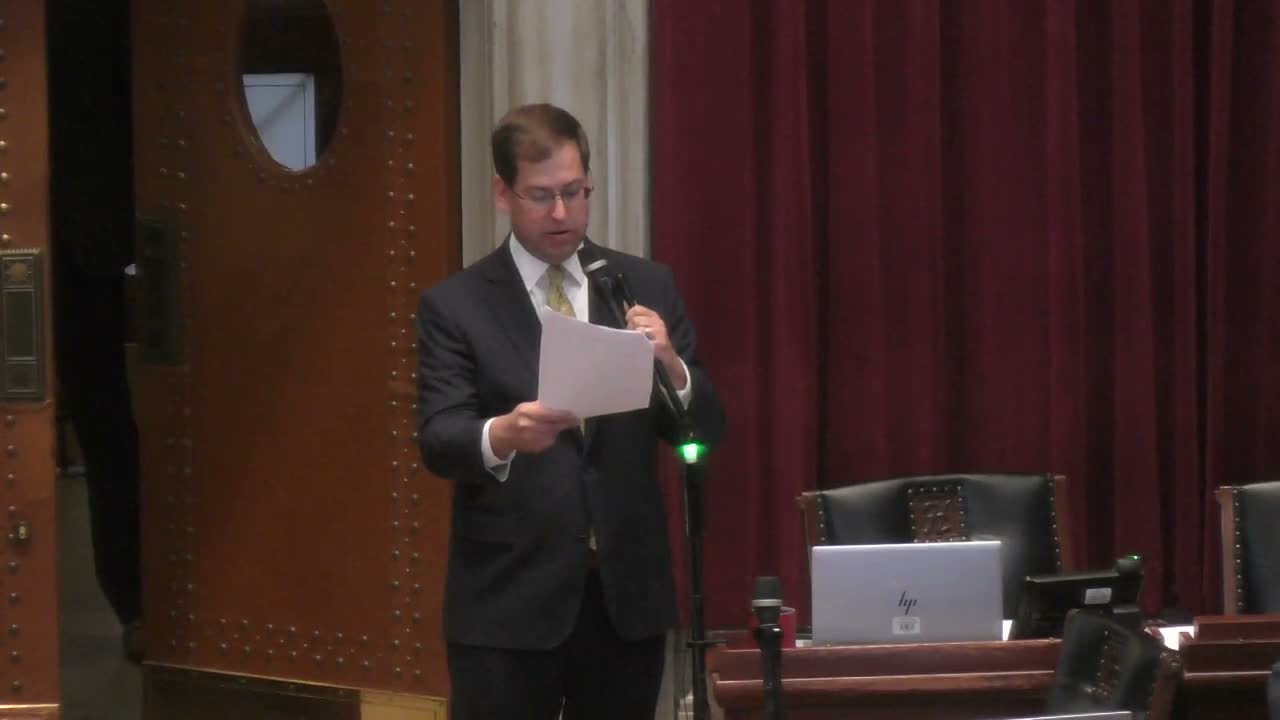
Representative from Greene County, the amendment’s sponsor, told colleagues the change would give Missourians more control over their money and put tax costs “right there in front of the consumer.” He framed the measure as a long-term constitutional mandate to shrink the role of the income tax and, separately, as an authorization, subject to guardrails, for the legislature to use consumption taxes to accelerate elimination.
Supporters repeatedly cited competitiveness with states that lack an income tax and argued that revenue-neutral expansions of the sales tax base could be paired with income-tax reductions. "It is time we give people back their time, talents and efforts," the sponsor said, urging a vote to put the question before Missouri voters.
Opponents cautioned that eliminating income taxes would not make revenue disappear and warned the measure could shift the burden onto seniors and households living paycheck to paycheck. "This doesn't eliminate taxes. This redistributes taxes," one critic said, arguing that broadening the sales tax base would be regressive. Several members raised specific concerns about health-care and education funding and whether the statutory follow-up would deliver the promised protections.
A central point of floor debate centered on the amendment’s guardrails. Members supporting the measure pointed to provisions requiring any consumption-tax expansion used to accelerate elimination to be revenue neutral (or less), to occur within the same legislation, and to be constrained to a five-year window, and to protections intended to prevent local school funding losses. Opponents said those guardrails did not eliminate the risk that future legislatures could raise taxes in ways that harm vulnerable households.
The House adopted a senate substitute and ultimately voted to truly agree and finally pass the measure. The final recorded vote on adoption and final passage was yeas 95, nays 59. Earlier procedural votes during consideration included approval of a previous-question motion and related procedural steps on the floor. With the House action complete, the constitutional amendment will appear on the ballot for Missouri voters to decide.
What happens next: The resolution, as passed by the House, now proceeds through the remaining constitutional amendment steps; if placed on the ballot and approved by voters, it will amend the Missouri Constitution to require the legislature to eliminate the individual income tax over time and permit, under the named guardrails, limited expansions of the sales/use tax to do so sooner. Floor debate made clear the measure remains controversial in its distributional effects and in members’ trust that future legislation and oversight will preserve services and protect seniors.
Votes at a glance: The House recorded the final passage tally as yeas 95, nays 59. Earlier in the floor sequence the House adopted the senate substitute and voted on motions necessary to conclude debate and advance the measure.