Get Full Government Meeting Transcripts, Videos, & Alerts Forever!
Get email alerts on the Maternal Health topic
No spam. Unsubscribe anytime.
Commissioners highlight Black maternal health, county staff cite outreach programs
Summary
At the April 9 meeting, commissioners recognized Black Maternal Health Week; Harris County Public Health staff said the maternal and child health program has reached about 500 families and outlined initiatives aimed at reducing maternal and infant morbidity and mortality.
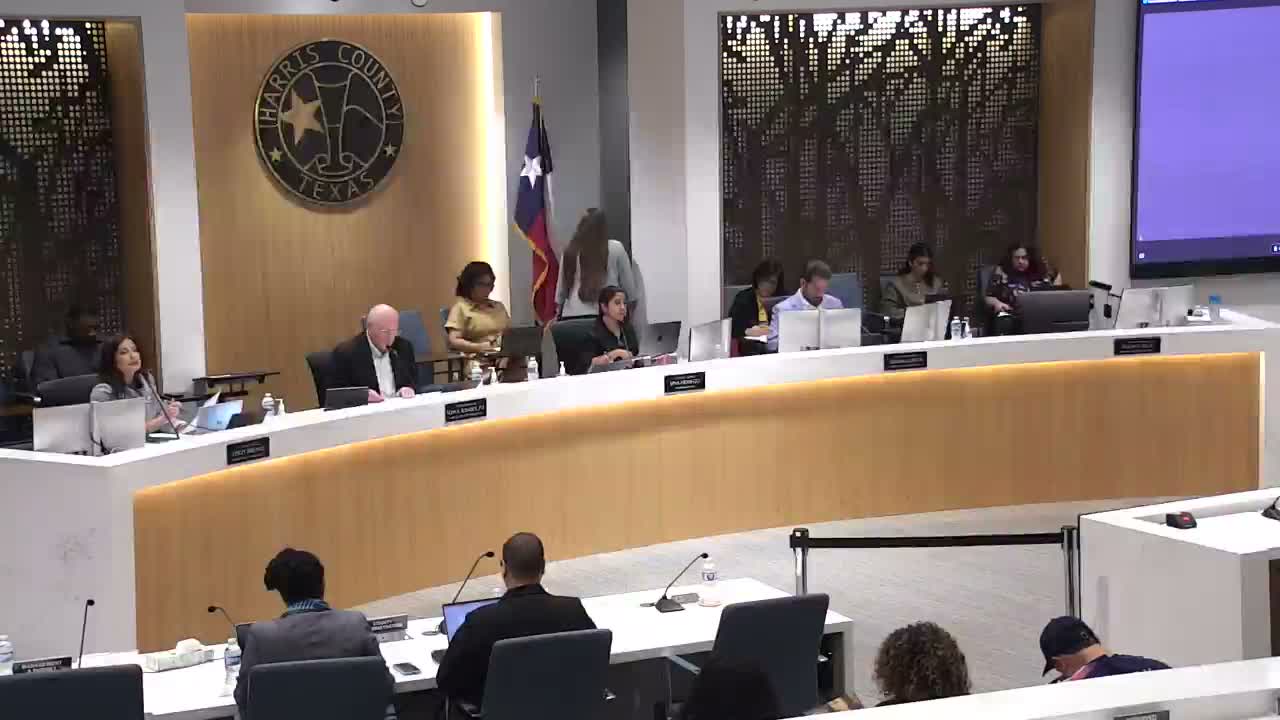
Harris County Commissioners Court on April 9 adopted a resolution recognizing Black Maternal Health Week and heard from county public-health staff about local outreach and support programs.
A commissioner introducing the resolution said Harris County has the highest Black maternal mortality rate in the nation and cited a figure of about 83 deaths per 100,000 live births for Black mothers. The commissioner called the statistic "unconscionable" and urged continued county leadership on the issue.
Lariana Bernardo, maternal and child health program manager at Harris County Public Health, said the program recently reached a milestone of roughly 500 families and listed several initiatives: a maternal bill of rights, a Texas children’s safe-sleep program, a car-seat distribution and safety program in collaboration with Harris County fire departments and the American Heart Association, and the MAMRx preeclampsia risk-reduction program. Bernardo thanked the court for ARPA funding that supports efforts to address disparities in maternal and infant outcomes.
Michelle Robinson, manager of the Healthy Start program, said the national Healthy Start model has reached more than 700 families in its first local year and emphasized connections to other county agencies to support mothers, babies and fathers.
A public commenter raised concerns that the resolution language did not mention people with disabilities and suggested the phrasing could be discriminatory; the court acknowledged the comment but no amendment to the resolution language is recorded in the meeting transcript.
The court adopted the proclamation as part of its resolutions for the day. The judge closed the item and the meeting proceeded to other proclamations.