Get AI Briefings, Transcripts & Alerts on Local & National Government Meetings — Forever.
Hays County tables controversial Hays Commons development agreement after hours of public opposition
Summary
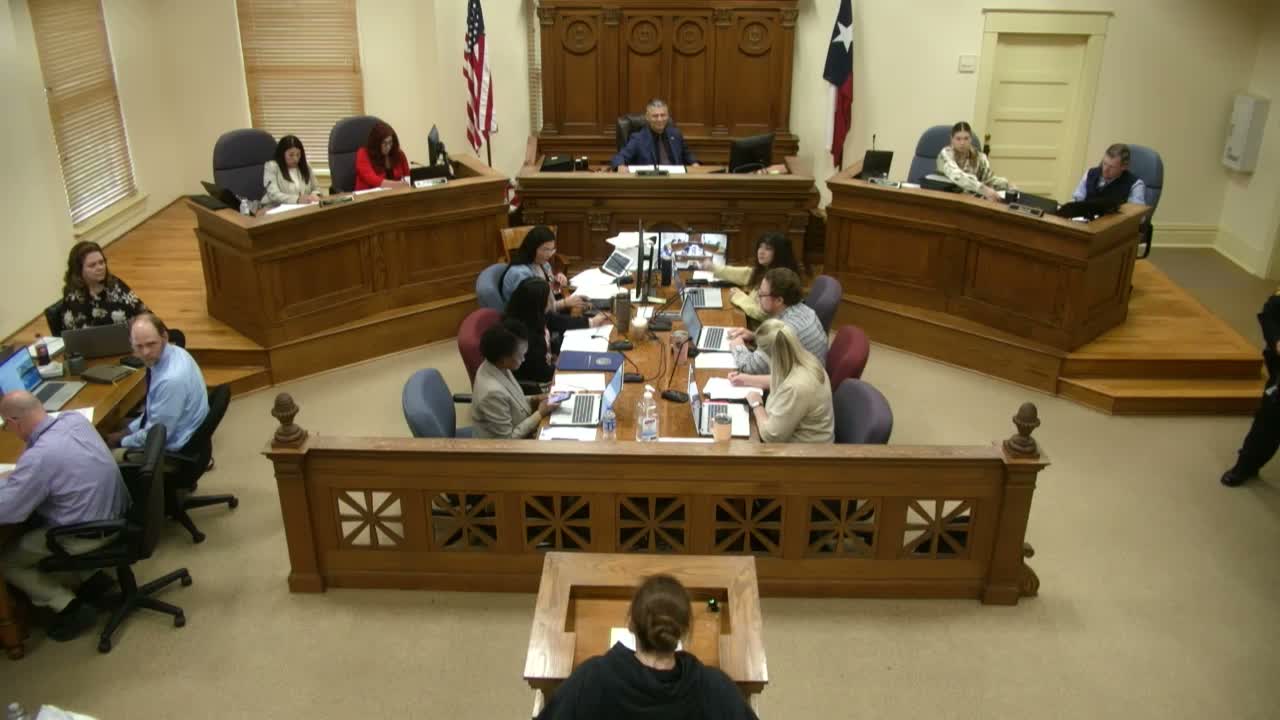
After hours of public testimony opposing variances that would shrink lot sizes over the Edwards Aquifer recharge zone, the Hays County Commissioners Court agreed to postpone consideration of a development agreement for the proposed Hays Commons subdivision and require expanded public notice and review.
Judge Becerra and the Hays County Commissioners Court on April 28 temporarily set aside consideration of a development agreement for the proposed “Hays Commons” subdivision following several hours of public comment and questions from commissioners.
Residents, environmental advocates and local officials told the court the proposal by Milestone Community Builders would reduce minimum lot sizes over the Edwards Aquifer recharge zone from 0.75 acres to as small as 0.20 acres and allow increased impervious cover and a Texas Land Application Permit (TLAP) that would distribute treated effluent across recharge features. "A variance that brings lot sizes down to 0.2 acres should not be granted simply to allow a for‑profit company to meet their profit margins," said Alana Beatty, a Chaparral Park resident who urged the court to remove items K‑6 and K‑7 from the agenda.
Speakers from grassroots groups and nearby cities described long‑running concerns about water supply and groundwater vulnerability. Bobby Levinsky of the Save Our Springs Alliance told the court the proposed density "fundamentally undermines Hays County's environmental protections for our groundwater," and said the developer had not demonstrated a permitted water source. Mayor Lydia Bridal Valdez of the city of Hays asked the court to table the matter while a contested TCEQ hearing over the TLAP continues, saying the permit application would place treated wastewater immediately behind the city’s wells.
Several landowners and business owners told the court they had not received timely notice of the revised development materials and said they were worried about flooding, effluent spray fields and damage to private wells. Entrepreneur Brett Mundy, whose property borders the proposed development, questioned whether any campaign donations to commissioners had affected the process and pressed the court to deny the requested variances.
In response, the commissioner who introduced the DA argued that a negotiated development agreement could secure protections the county lacks under state statute — such as preserved open space "in perpetuity," dark‑sky lighting standards and other conditions that would not exist if the developer simply submitted a plat that met county regulations. County counsel and the sponsor also outlined a public‑notice plan: direct mailed notices to contiguous property owners and a newspaper posting to run twice during a 30–45 day posting period.
After discussion, the court agreed to table the item and return to it after an expanded public‑notice period. The commissioners said the pause was intended to give affected residents, neighboring jurisdictions and water‑resource authorities additional time to review the proposal and supporting studies.
What happens next: The court directed county staff to run the required notices and to return K‑6 for further consideration at a future meeting scheduled after the notice period. The court did not approve the development agreement or the requested variances at the April 28 meeting.
Note on sources and scope: This article reports on remarks and documents presented in the April 28 Hays County Commissioners Court meeting; it relies on public testimony delivered at the hearing and statements from county officials and staff. It does not evaluate technical groundwater models or TCEQ permit materials; those remain subject to separate regulatory review.