Get Full Government Meeting Transcripts, Videos, & Alerts Forever!
Get email alerts on the Water Conservation topic
No spam. Unsubscribe anytime.
Hays County judge introduces 30‑day pause on high‑water industrial permits; commissioners table item after legal warnings
Summary
Judge Reuben Becerra read a resolution calling for a 30‑day temporary evaluation period on new industrial permits projected to use more than 20,000 gallons per day. Residents urged action; county legal staff warned the pause could exceed county authority and trigger automatic approvals under state permit 'shot clock' rules, and the court tabled the measure for revision.
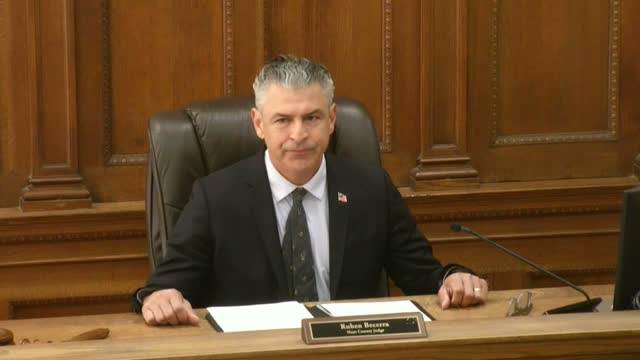
Judge Reuben Becerra moved on Feb. 24 for a 30‑day “temporary evaluation period” that would suspend final county action on proposed industrial projects expected to use more than 20,000 gallons of water per day while staff reviews water‑supply feasibility and updates procedures.
The resolution, read into the record by county staff, framed the pause as a precaution in light of exceptional drought conditions and possible public‑safety risks, saying the county must “evaluate cumulative impacts, review existing development procedures, and consider updates to county standards” for high water‑use projects. Becerra urged his colleagues to adopt the measure as a short, targeted safeguard. “In the great words attributed to President Franklin Roosevelt, ‘do anything but do something.’ Today, this resolution is our something,” he said.
Dozens of residents, conservation groups and local organizations urged the court to act immediately. Bobby Levinsky of Sabre Springs Alliance and other public commenters told commissioners that recent water declines and pending proposals for data centers and other large users require stronger local review and that a pause would provide time for meaningful review and state advocacy.
But county legal advisers and several commissioners raised questions about the county’s legal authority. Civil first assistant Jordan Powell told the court her office’s view that there is little or no legal difference between the words “moratorium,” “pause” or “temporary suspension” and cautioned that the county may lack authority to block or delay certain types of development. “It’s our opinion that there wouldn’t be a legal difference between moratorium, temporary pause, anything of the like — they would have the same legal effect,” she said.
Commissioners and the county’s assistant criminal district attorney warned that state deadlines for municipal and county permit review — often described in the meeting as a 30‑day “shot clock” — could mean an applicant wins automatic approval if the county does not act. Assistant criminal district attorney Chase Young said a pause written as proposed would likely be found outside county authority and expose the county to litigation.
Some commissioners said they support the policy goal but want to craft a legally defensible approach, such as: funding technical reviews by groundwater districts; coordinating regionally with water providers; or asking the legislature for explicit county authority. Commissioner Debbie Inglesby and others urged working with groundwater districts and legislative allies to secure lasting tools for local review.
After extended debate, Judge Becerra moved to table the item so staff and counsel could revise the language and pursue other avenues for action. No final vote on the substantive pause was taken.
What happens next: court members said they would return to the topic with revised language, possible technical funding mechanisms, and continued outreach to state legislators and local water providers.