Get Full Government Meeting Transcripts, Videos, & Alerts Forever!
Get email alerts on the Budget Finance topic
No spam. Unsubscribe anytime.
Lewiston council explores cuts and revenue options as staff models $1.04M needed to meet CPI target
Summary
Staff told the council roughly $1,042,000 in additional reductions would be required to reach a 3.3% increase on the city portion of the levy; councilors discussed potential revenue and cost measures including airport MOU renegotiation, 911 consolidation, parking fee increases and MWAC tipping‑fee issues.
City finance staff and administrators told the council that, after applying a planned fund‑balance drawdown, the city would still need roughly $1,042,000 in additional reductions to bring the city portion of the proposed tax levy to a 3.3% increase.
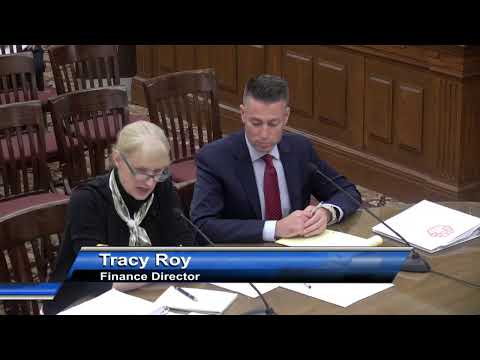
Councilors and department heads discussed where those reductions might come from and explored revenue options. Councilor Nagy recommended reviewing intermunicipal agreements (notably the Auburn‑Lewiston Airport MOU, under which Lewiston currently pays $205,000 annually and will stop receiving related enterprise‑zone revenue by 2029) and the possibility of renegotiating or ending participation. Director Roy said the MOU currently prevents reducing Lewiston's contribution unless Auburn agrees and that staff will re‑share the MOU and revenue figures for council review.
Councilor Nagy also raised consolidation of 911 services with the county as a potential cost saver; staff cautioned consolidation is technically complex and may not be feasible in the near term but committed to getting cost comparisons from the sheriff and county.
On revenue generation, councilors discussed modest increases to parking garage fees (currently $55/month for general users; different tiers exist for downtown residents and businesses) and the possible creation of a dedicated parking enterprise fund to ensure parking revenues support maintenance of garages rather than the general fund. Economic development input was requested before changes are proposed.
Councilors probed a roughly $250,000 overrun tied to MWAC (waste‑to‑energy) shipments when material could not be burned and had to be shipped elsewhere; staff explained the contract runs through June 30, 2032, and that some of the expense/revenue separation had been added to the budget for transparency; staff will follow up with detailed numbers.
Staff warned that across‑the‑board cuts (for example, a flat 5–10% reduction) would be unevenly borne because some small departments have little discretionary budget to absorb cuts; personnel reductions would likely be required for deeper savings. The administration offered to model specific scenarios showing which services and positions would be affected by different reduction targets.