Get AI Briefings, Transcripts & Alerts on Local & National Government Meetings — Forever.
Neptune Township board hears 2026–27 budget presentation as residents urge cuts; finance items approved
Summary
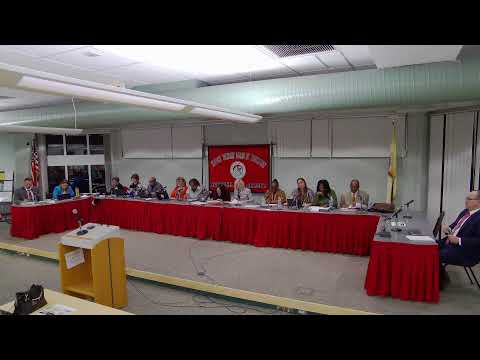
The Neptune Township Board of Education heard a detailed presentation on the 2026–27 budget from Business Administrator Vincent Carrivol and heard more than a dozen public speakers urging the board to reject or drastically reduce the proposal citing high taxes and empty school buildings. The board approved a slate of routine finance and administrative items by roll call and moved to executive session on personnel.
The Neptune Township Board of Education held a public hearing on the proposed 2026–27 budget and listened to sustained public criticism about taxes and underused school facilities before approving a series of finance and administrative items.
Business Administrator Vincent Carrivol presented the budget overview, telling the board that mandated charter-school payments had risen to $5,400,000 for 2026–27 and that district health‑benefit renewals showed a steep increase (the presentation cited roughly a 28% rise in medical costs and about 26% for prescription coverage). Carrivol said the district would aim to remain within the 2% tax-cap and described budget reductions of about $1.8 million taken from buildings and grounds, transportation and other line items to limit the tax impact while preserving instructional programs.
That presentation prompted lengthy public comment in which residents pressed two recurring themes: the district is operating a building footprint sized for roughly 6,500 students while enrollment is about half that, and rising health‑benefit and other mandated costs are forcing tax increases. “We are taxed beyond. Two percent is too much,” said Karen Mason of 105 Cardinal Road, who called on the board to stop acting as a “rubber stamp.” Paul Zapka urged the board to “right‑size” the district, arguing the operating footprint is unsustainable given about 3,400 current students and the ongoing maintenance burden of empty buildings. Several commenters, including Johanna Habib, praised the board for holding the line at 2% but urged state‑level reform of school health‑benefit funding.
Other speakers urged concrete steps such as selling or repurposing empty school buildings, presenting scenario analyses of potential savings, and greater transparency about alternatives to tax increases. “Stop taxing us to subsidize empty space,” Paul Zapka said. Multiple residents asked the board to vote no on the budget and return with a plan to align facilities to current enrollment.
After public comment the board moved through its consent and action agenda. Motions to approve minutes, superintendent recommendations, finance items, facilities items, education special projects, special‑education items, student activities, personnel recommendations, negotiations items and the schedule of meetings were presented and approved by roll call. The transportation slate noted one partial abstention: Miss Hoffman abstained from transportation item 1 and voted yes on items 2 and 3. At one point in the public exchange a resident asked whether a formal budget vote had been taken; board members indicated finance items had been approved under the finance agenda.
The meeting concluded with a resolution to meet in executive session to discuss personnel, with the board stating no action would be taken immediately after the closed session.
Why it matters: The board must balance legal and contractual mandates — including rising health‑benefit costs and mandated charter payments — against public pressure to reduce tax burdens and align the district’s facilities with current enrollment. Residents emphasized urgent fiscal questions that the board and administration will face again in the coming months.
Votes at a glance: - Approval of minutes (work session 03/23/2026 and regular meeting 03/20/2026): moved by the record (Vincent Harrison), seconded by Miss Thompson; approved by roll call (majority aye). - Superintendent’s report (Document A, items 1–6): approved by roll call. - Finance (Document B1, items 1–22): approved by roll call (finance items included routine approvals; discussion in the meeting record indicates the budget presentation was handled under finance). - Facilities (Document B2): approved by roll call. - Transportation (Document B3, items 1–3): approved by roll call; Miss Hoffman recorded an abstention from item 1 and yes votes on items 2 and 3. - Education special projects (Document C1, items 1–3): approved by roll call. - Special education (Document C2, items 1–2): approved by roll call. - Student activities (Document C3): approved by roll call. - Personnel (Document D1, items 1–61): approved by roll call. - Negotiations (Document D2): approved by roll call. - Schedule of meetings: approved by roll call.
Next steps: The board entered executive session to discuss personnel matters; no public action was announced at adjournment.