Get Full Government Meeting Transcripts, Videos, & Alerts Forever!
Get email alerts on the School Finance topic
No spam. Unsubscribe anytime.
Canfield board leans toward operating levy, sets community forum for May 14
Summary
At a special April 22 meeting the Canfield Local School District board signaled it will prioritize an operating levy to address a budget shortfall and scheduled a community forum for May 14 to gather input before deciding whether to pursue a November 2026 or May 2027 ballot date.
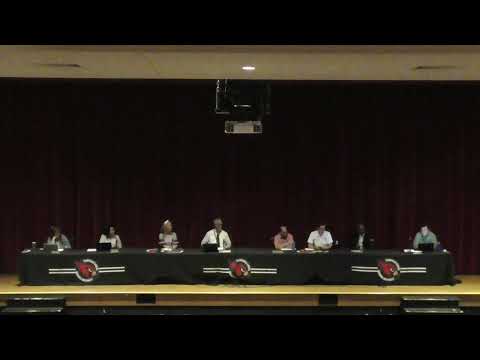
The Canfield Local School District board met in a special session April 22 to review the district's budget forecast and next steps for raising revenue. The board signaled a preference for pursuing an operating levy rather than a facilities-only bond and scheduled a community forum for May 14 to collect public feedback before finalizing a millage recommendation.
Board members opened by emphasizing the urgency of the district's fiscal situation and the need for a targeted, realistic approach. "We're kind of at a breaking point here," the chair said, summarizing the presentation the board received last week that showed the district has not asked for new operating money since 2013. The chair and several members said preserving core instructional programming and staff should be the top priority.
District finance staff explained the practical difference between an operating levy and a bond, and why that distinction matters for voters and planning. "An operating levy's dollars can be used for salaries, utilities and some building fixes," the staff member said. "A bond issue would be solely for building expenditures and could not be used to pay salaries." The staff member also noted that the county auditor certifies exact dollar amounts when a millage is filed.
Board members and levy-committee representatives discussed dollar-scale options and ballot timing. The staff's modeling showed that a 5-mill operating levy would leave the district with about 103 days cash on hand by 2030, while a 6-mill scenario would raise that projection to about 136 days. Board member Jason Henry summarized the trade-offs plainly: "I believe the millage you needed was to get $4,900,000 to be able to cover it over the 5 years," and cautioned that smaller asks could force staff reductions.
The board weighed calendar choices and community readiness. Staff outlined the practical ballot windows (November 2026 or May 2027) and renewal constraints for existing levies; a levy committee member said the committee can begin fundraising immediately but needs clarity on ballot language to begin voter outreach. Several board members urged an earlier ballot to address cash shortfalls sooner; others stressed the need to educate and engage voters so any request is attainable.
To widen input, the board set a community forum for Thursday, May 14 at 6 p.m. in the district media center, with the levy committee and district staff to present options and gather resident feedback. The board also asked staff for detailed reports on maintenance and utility spending and for hypothetical millage scenarios (including the effects of adding one mill for facilities) to inform the levy committee's recommendation.
The meeting closed with a motion to adjourn that was moved and seconded and met at least one recorded affirmative response. The board's next steps are to publish the staff scenarios, convene the May forum and return to a regular or special meeting to consider formal resolutions based on community input.