Get AI Briefings, Transcripts & Alerts on Local & National Government Meetings — Forever.
Masconomet School Committee directs administration to seek outside audit after bullying and Title IX concerns
Summary
After public comment and a legal overview of Title IX and privacy limits, the Masconomet School Committee voted to ask the administration to develop a statement of work to procure an outside audit of policies, procedures, the student handbook and the bullying prevention plan related to a recent incident.
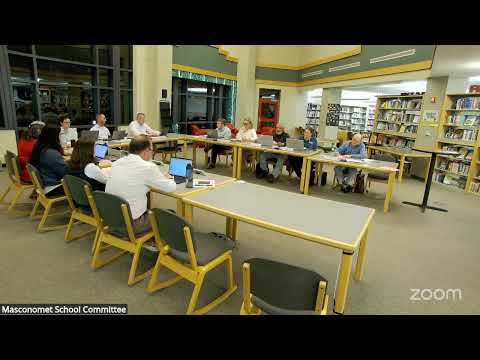
The Masconomet School Committee voted April 29 to direct the district administration to develop a statement of work and solicit proposals from independent firms to audit the district’s policies and procedures related to bullying, harassment and discrimination.
The action followed a public comment from Ellen Sheehy, a library media specialist, who said the district must treat repeated incidents as bullying: “I hope that you will recognize that 8 months of multiple and ongoing incidents meet the criteria for bullying rather than seeing each incident as an isolated occurrence,” she told the committee.
The committee then heard an extended presentation from Matt McAvoy, the district’s counsel for student-related matters, who outlined how Title IX and other grievance procedures operate and explained limits on what the school committee may receive. “Under the law, school committee members do not have access or authority to intervene in student matters, including the details of any process, outcomes, or actions taken,” McAvoy said, and he described the Title IX workflow under the current 2020 regulatory framework: a written complaint, outreach by the Title IX coordinator, an evidence‑gathering phase, a 10‑day review period for parties to comment on evidence, a separate decision maker using a preponderance‑of‑the‑evidence standard, and a limited appeal window.
Committee members pressed McAvoy on what the committee can be told. He said de‑identified, aggregate data such as “the number of complaints we’ve received, the number of investigations conducted, and the number of notice of outcome letters issued” can be provided to the committee and is public record, but that disclosure of investigation files or personally identifiable student information requires written consent from parents or eligible students.
Concern about scope and cost surfaced during debate. One member urged a narrow review of the specific incident or incidents that prompted the meeting; others supported a broader look at policy alignment and procedures. Committee member (speaker 5) argued the audit should cover policy, procedures, the student handbook and training and moved that the committee direct the administration to prepare a statement of work to procure such an audit. The motion was seconded and approved by voice vote; committee members did not record a roll‑call tally during the vote.
Next steps: the administration will prepare the requested statement of work and solicit quotes, and the school committee said it will consider allocation of funds and contract execution at a future meeting. McAvoy recommended the committee address confidentiality and deliverable language with any firm they retain so the committee can receive a summary that does not disclose personally identifiable student information.
The committee’s action does not itself alter any student‑level findings or disciplinary outcomes; McAvoy reiterated that Title IX and civil‑rights grievance procedures, and any resulting appeal rights, remain the applicable frameworks for individual cases.