Get AI Briefings, Transcripts & Alerts on Local & National Government Meetings — Forever.
House advances a package of sunset extensions, program bills and funding measures; several pass by wide margins
Summary
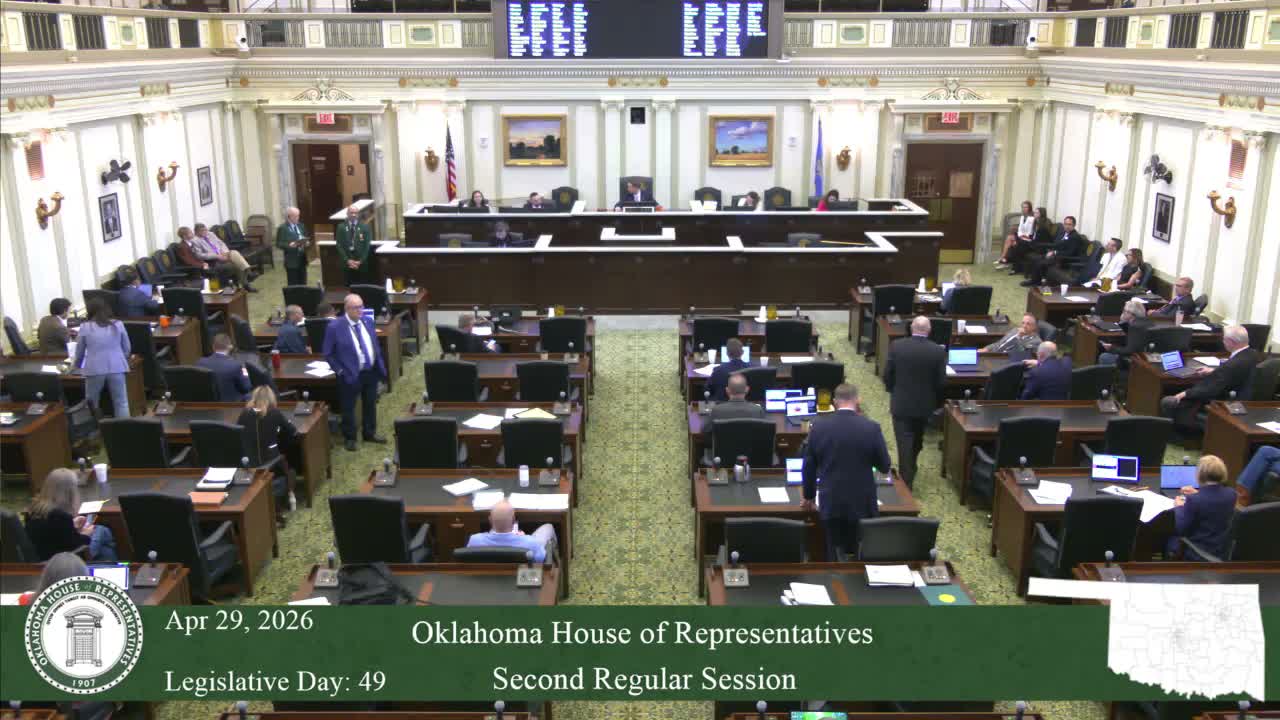
On April 29 the Oklahoma House advanced and passed a series of bills — including measures that restrict certain SNAP purchases, create insulin access programs, extend multiple regulatory boards, and authorize debt service increases for road funding — mostly by recorded vote; a number carried emergency declarations.
The Oklahoma House on April 29 moved a broad package of bills through third reading and recorded votes, approving measures that ranged from narrow statutory cleanups to program authorizations and funding adjustments.
Among the bills the House passed were measures to require supervised visitation when a person has been found to have committed child abuse (SB 2170), codify a federal waiver limiting SNAP purchases of candy and soft drinks (SB 1833), and create an insulin access and affordability program at the state health department that allows memoranda of understanding with domestic producers (SB 1344). Several sunset extensions for professional boards and pilot grant programs were advanced and passed with little debate.
Leaders moved many of the bills by unanimous consent or routine procedural motion; where members had questions they were brief and typically limited to a single exchange. Representative Stinson described the insulin program as a partnership to increase access and lower costs; Leader Lawson described a two-year pilot grant program for victims of labor and human trafficking.
Votes at a glance - SB 21-70 (child-custody supervision): Passed, 77–2. - SB 18-33 (SNAP purchase prohibition): Passed, 62–17. - SB 11-98 (OK Health Care Authority releases): Passed, 79–2. - SB 13-79 (victim services pilot grants): Passed, 86–0; emergency declared. - SB 16-45 (Medicaid audit rules): Passed, 79–7. - SB 13-44 (insulin access program): Passed, 68–22. - SB 13-09 (roads & bridges fund increase): Passed, 89–2.
Why it matters: The bills include program changes that affect health-care delivery, nutrition-assistance rules, and how state agencies administer grants and projects. Several measures carried emergency declarations, which accelerates their immediate effect if enrolled and signed.
Next steps: Passed measures will proceed through the enrollment and transmittal process. Where emergency or effective-date votes were recorded, legislative staff will note the timing for executive action.