Get Full Government Meeting Transcripts, Videos, & Alerts Forever!
Get email alerts on the Fraud Prevention topic
No spam. Unsubscribe anytime.
Moore County captain and IT specialist tell seniors how to spot romance, tech-support and investment scams
Summary
Captain Bradley Whitaker and IT specialist JD Woodard urged attendees at the Moore County Senior Enrichment Center to 'be a scam buster,' explaining phishing, tech-support fraud, jury-duty impersonations and 'pig butchering' crypto schemes and sharing reporting and recovery resources.
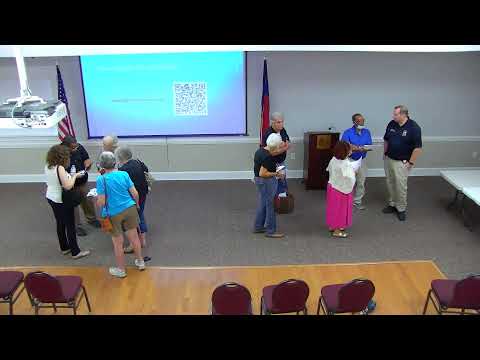
Captain Bradley Whitaker of the Moore County Sheriff’s Office and IT specialist JD Woodard told a room of seniors at the Moore County Senior Enrichment Center that scams are growing more sophisticated and that victims should not blame themselves.
“People who fall victim to scams … understand you’re not stupid,” JD Woodard said, emphasizing that many victims are targeted by organized, professional criminals.
Woodard framed the presentation, called “Scam Busters,” around practical red flags — unfamiliar contacts asking to move conversations off big social platforms; urgent, generic emails that use blind carbon copy; and requests to pay via gift cards, Green Dot cards or cryptocurrency. He cited two data points to underline the scale of the problem: “In 2024, the Federal Bureau of Investigation reported America losing $16,600,000,000 due to scams,” he said, and he noted an AARP estimate that only about 14% of scams are reported to the FBI or the Federal Trade Commission.
Whitaker, the Moore County captain who helped present, focused on phone impersonation scams that target seniors. He urged skepticism of calls demanding immediate payment and described a common pattern: scammers impersonate court or law-enforcement officials, instruct victims to buy prepaid cards (for example, Green Dot cards) and then give the card numbers to the caller. “If anyone ever tells you you have to do payment through a Green Dot card … then it’s obviously a scam,” Whitaker said, adding that legitimate jury notices arrive by mail and that the sheriff’s office will not demand payment by phone.
The presenters illustrated a variety of commonly used scams: phishing emails that try to harvest login credentials, fake antivirus or tech-support calls that ask for remote access to a device, fraudulent invoices and lottery notices sent from free email domains, job-offer schemes that use fake cashier’s checks to trick victims into advancing money, and elaborate romance/investment frauds known as “pig butchering” that build trust over months and sometimes extract large sums in cryptocurrency. They described how scammers use spoofed numbers and overseas messaging apps such as Telegram or WhatsApp to frustrate investigations.
Practical steps Woodard and Whitaker recommended included: do not call phone numbers provided in suspicious emails or texts (instead call the number on the back of your card or the institution’s published number), never grant remote access to your computer or phone to someone you do not personally know, do not respond to unknown text messages (mark and delete as spam), and do not send money via gift or prepaid cards. For suspected fraud, they advised freezing credit reports with the three bureaus and filing complaints with federal resources such as the Federal Trade Commission and the Internet Crime Complaint Center (IC3).
Audience members asked about skimmers and RFID theft; presenters recommended RFID-blocking wallets and regular monitoring of bank accounts and credit reports. Woodard offered to share the full slide deck and a free monthly “Scam Buster” newsletter, and Whitaker provided the sheriff’s office main number for verification and reporting.
The presentation closed with organizers thanking sponsors and inviting attendees to take pamphlets and contact presenters for follow-up. Materials the presenters referenced included IC3, the Federal Trade Commission, the U.S. Secret Service contacts in Charlotte and a program the presenters called Operation Shamrock for crypto-related reporting and assistance.