Get AI Briefings, Transcripts & Alerts on Local & National Government Meetings — Forever.
Minnesota Democrats push $700 million HHS package to blunt HR 1 changes
Summary
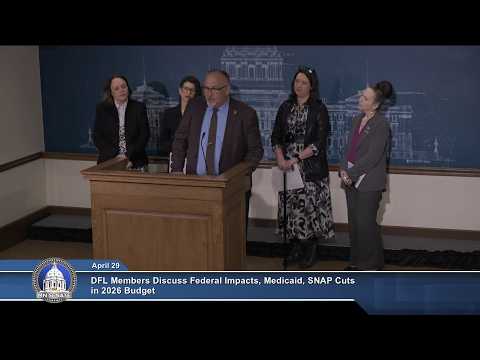
DFL senators defended a $700 million health and human services supplemental budget on the Senate floor, saying the funds are needed to stabilize hospitals, backfill county SNAP and Medicaid costs and avert coverage losses tied to federal HR 1 changes; a floor vote was announced but no outcome appears in the transcript.
State Sen. Liz Golden, a registered nurse who represents Rochester and sits on the Senate Health and Human Services Committee, opened floor remarks saying the Senate would vote on a $700 million health and human services supplemental budget meant to offset effects from the federal bill known in the transcript as HR 1.
Golden said the package directs more than $250 million "toward keeping our hospitals open" and about $300 million "to stabilize local budgets, keep down property tax increases, and absorb shifts to counties on cuts to SNAP and food support." "The bill we will pass today spends $700,000,000 trying to fill the holes blown open by cuts, shifts, and gimmicks imposed by Republicans in DC on medical assistance and food support," she said.
The nut graf: DFL senators on the floor said the spending is intended to prevent immediate disruptions to care and county services after federal changes that they said would impose work‑reporting and reenrollment requirements on Medicaid and SNAP. Senators warned those requirements will add administrative burdens, cause eligible people to lose coverage and increase uncompensated care burdens on hospitals.
State Sen. Erin Maye Quaid called the proposed federal rules "one of the cruelest" policies she has seen and estimated the changes would "deprive more than a 150,000 Minnesotans of the Medicaid coverage they rely on." She told colleagues the state package is intended as mitigation but not a long‑term solution.
State Sen. Lindsey Port, who co‑chaired a select committee that visited food banks and hospitals, warned of cascading impacts if the state does not act. "If we don't spend this money... our health care system will collapse. People in Minnesota will die," Port said, describing immediate risks to hospital staffing, benefit administration and SNAP access.
Lawmakers on the floor outlined specific line items in the Senate package but said the final content remains subject to negotiations with the House and potential changes in conference. Golden summarized the hospital funding in the current Senate bill as roughly $300 million for HCMC and a hospital stabilization fund: about $150 million for HCMC, about $115 million for hospital stabilization grants, $18 million for community safety‑net providers and $15 million for rural EMS uncompensated care. She said the HCMC governance advisory task force aims to provide both short‑term oversight and longer‑term structural support.
Sen. Rob Kupak and others noted the bill also includes new or expanded support for food banks and food shelves and a prepared‑meals provision intended to help regional food systems already stretched thin. Senators cautioned that some implementation costs — particularly county hiring to process new work‑reporting rules — are not fully covered by the state package; Maye Quaid cited Dakota County estimates of 60–70 additional positions to meet new administrative requirements.
Several senators framed the vote as politically unavoidable: they said federal action left the state with a choice between accepting federal policy changes and providing short‑term funding to prevent immediate harm, or refusing funding and risking rapid coverage losses and service collapses. Golden and colleagues said they expected most Republican senators to oppose the package on principle, and the group described the DFL role as responding to federal policy by mitigating harm through state funding.
No roll call or final vote outcome is recorded in the transcript excerpt. The Senate debate concluded with senators saying the bill would be negotiated further and that caucuses would continue discussions before the next steps.
Next steps: the measure was scheduled for a Senate floor vote and will proceed to negotiations with the House; details and any final appropriation amounts may change in conference or subsequent action.