Get AI Briefings, Transcripts & Alerts on Local & National Government Meetings — Forever.
Residents urge Franklin County to slow data-center approvals, demand transparency
Summary
Multiple residents told the Franklin County Commission they oppose fast-tracking land-use changes that could allow large data centers, raising environmental, health and process-transparency concerns and urging conditional-use reviews or ballots.
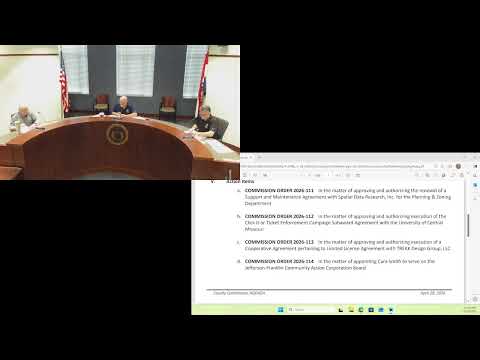
Franklin County residents packed into the commission chamber and urged elected officials to halt or slow changes that would make it easier to build large data centers, saying the projects could harm water, wildlife and neighborhood quality.
The public-comment period, which drew more than a dozen speakers, centered on concerns about runoff, noise and the pace and openness of the planning process. Wilton Reisenhoover, a Pacific resident near the proposed McLaren site, said an "80-foot high" structure and roughly "500 acres of concrete and roofs" would alter flood patterns and damage the Merrimack River and downstream parks. "This is the worst possible place to put a data center," Reisenhoover said.
Other speakers pressed procedural issues. April Bridal Hoover asked the commission to solicit community feedback before adopting regulations and raised questions about whether a transportation official took part in a prior zoning vote. "Wouldn't it be great if you would stop and ask for community input now instead of passing whatever regulations have been set up by whomever?" she said.
Twila Ashworth urged the commission to require conditional-use permits for large facilities and proposed technical safeguards including consistent setback rules (she suggested 1,000 feet) and decibel limits to protect residents' hearing. "Data centers are not light industrial," Ashworth said, arguing independent environmental, air, water and seismic studies should be required.
Seventeen-year-old and youth speakers also appeared. Daxon Bowers, 13, said he has a medical condition exacerbated by pollution and pleaded with commissioners not to place hyperscale facilities near homes; he asked that rezoning or rule changes be put to a public vote.
Speakers cited broader civic and policy questions: Gary White warned that two projects would consume more than 1,000 acres and erode agricultural character; Corbett Shannon accused commissioners of echoing developers' talking points and demanded town halls; and several residents complained that planning-and-zoning hearings have not allowed adequate discussion or representation for certain townships.
Several commenters proposed concrete steps: baseline environmental testing of wells and streams before construction, scheduling public hearings at times accessible to farmers and workers, and preserving conditional-use review as a way to ensure public input. "Make meetings more accessible — allow electronic sign-ups, evening meetings and continuous sign-ins," Jennifer Moody said.
The commission did not take public testimony questions on most claims during the meeting; the chair reminded speakers of the three-minute limit and the meeting proceeded to administrative business. No new regulatory vote was recorded at this session.
The meeting closed after the commission approved a set of routine administrative orders and adjourned. Residents at the meeting said they will continue to press the commission for more transparency and for environmental reviews before any land-use changes are finalized.