Get AI Briefings, Transcripts & Alerts on Local & National Government Meetings — Forever.
District staff outline $704 million in facility needs, present master plan as 'living document'
Summary
District officials presented a two-part facilities master plan that combines a demographic study with a facilities condition assessment, reporting roughly $704 million in districtwide needs and describing the plan as a 'living document' to guide capital requests and grant-seeking.
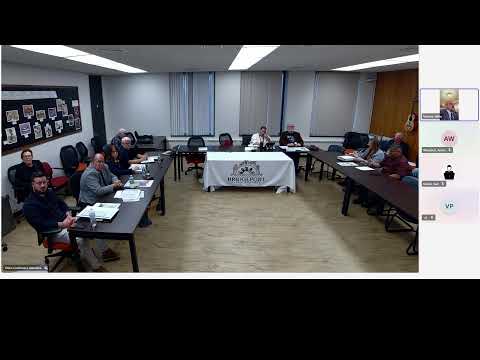
District staff on the Bridgeport School District ad hoc committee presented a two-part facilities master plan and said it identifies about $704,000,000 in districtwide facility needs.
The presentation, led by district staff and facilities official Garcia, laid out Part A (a demographic study) and Part B (the facilities master plan) and emphasized that the work included walking every building and cataloguing mechanical, envelope and environmental conditions. "The number was right around 700, I believe, $704,000,000 of needs district wide for our facilities," Garcia said, describing the figure as driven by building vintage and deferred maintenance.
Staff described the facilities condition assessment (FCA) as a "living document" that will be updated as the district makes investments. Garcia cited the recent closure of BASIC as an example of how changes in the building portfolio affect the total need, saying that closure saved roughly $80,000,000 against the total FCA estimate.
The demographic portion, presented by the district's presenter, reviewed historical enrollment trends, student migration patterns, birth-rate projections and charter/private/parochial enrollment to produce 10-year projections. The presenter stressed that official projections used in state reporting are produced by a third-party vendor and that the district maintains its own, more current internal projections for planning: "Bridgeport Public Schools is not allowed to project when it comes to any building ... a third party vendor ... has to come in and give projections," the presenter said.
Staff also broke down classroom capacities and contract-related class-size limits used in the analysis (prekindergarten classes capped at 18; kindergarten and first grade at 24; grades 2–12 up to 29; many special-education classroom limits around 12). They reported an approximate loss of 700 students year-to-year and said that inventory work and utilization metrics helped identify schools that are under- or over-utilized.
The presenters said the FCA includes cost-per-square-foot and cost-per-enrollment metrics that can help the district target investments with the greatest return for students and taxpayers, and that they will use the plan to inform future capital requests to the city and to pursue state and federal grants.
The committee asked staff for up-to-date projection spreadsheets and for analysis comparing building capacity to program-specific space needs; staff agreed to provide those materials. The meeting closed with staff and board members noting that the master plan and follow-up work will guide decisions about program placements, transportation impacts and potential future construction.