Get Full Government Meeting Transcripts, Videos, & Alerts Forever!
Get email alerts on the School Funding topic
No spam. Unsubscribe anytime.
Tallmadge treasurer warns of $2 million funding loss as state formula phases in; board urges passage of 5.6‑mill levy
Summary
At a Tallmadge City forum, Treasurer Jeff Hottstetler said state and local rules have left the district with shrinking state aid and capped local growth, projecting more than $2 million in lost funding by the end of the fair‑funding phase‑in. State representatives offered differing explanations of budget choices, while board members detailed past cuts and potential service reductions if a proposed permanent 5.6‑mill levy fails.
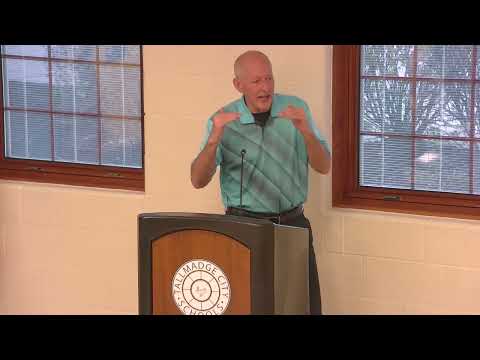
Treasurer Jeff Hottstetler told Tallmadge City residents the school district faces a structural funding squeeze and urged passage of a proposed permanent 5.6‑mill levy on the ballot.
"Funding for public schools is broken," Hottstetler said in a 45‑minute presentation explaining local levies, debt service and the state funding formula. He cited House Bill 9‑20 (commonly called HB 920) and the state formula's use of rising property valuations as primary causes that reduce the district's state share even when local effective millage does not grow. Hottstetler said the district has already lost categorical funding and projected the district could lose more than $2 million by the end of the formula's phase‑in.
The forum, moderated by Third Ward councilman Jonathan Bolas, brought state representatives Heidi Workman and Derek Hall to explain the state perspective. Workman said the most recent state budget increased K‑12 funding by billions and that Tallmadge is projected to receive roughly the same total state aid next year as the current year; she described the budgeted increases as the largest in years. "We have worked really hard to try to increase funding," Workman said, noting per‑pupil aid has risen in recent years.
Rep. Derek Hall said budget choices — including recent income‑tax cuts — constrained how much of the Fair School Funding formula the General Assembly could fund. He described the original intent of the fair‑funding redesign as moving toward roughly a 50/50 state/local split and argued that the state has not fully implemented that goal. "Budgets are about choices," Hall said, urging residents to consider state priorities when voting.
Board members and district leaders detailed steps the district has already taken to reduce costs and what would come next if additional revenue is not secured. The board listed recent cuts: elimination of several administrative roles and multiple teaching positions, and they identified transportation as a major nonclassroom expense, estimating a cost of about $80,000 per bus route and roughly $3,000,000 total spent on busing. "If we can't pass a levy, we can't afford certain things," one board member said, noting transportation reductions would be among the earliest measures.
Audience members asked specific operational questions the board acknowledged would affect families if the levy fails. District officials said federally mandated IEP transportation would continue, but siblings of students who qualify for IEP transportation would not automatically be included under a two‑mile exception. On special education, officials described a major funding gap: some students cost the district upward of $100,000 to educate while state formulas and threshold reimbursements cover only a fraction of that expense.
Both state representatives described recent legislation addressing property‑tax relief and levy mechanics. Workman summarized a set of bills (including House Bills 124, 129, 186 and 335) she described as property‑tax reforms that will produce statewide relief but said Tallmadge itself would be largely unaffected. Hall reiterated that policy tradeoffs at the state level — such as cutting the top income‑tax bracket — reduced available revenues to fully fund the fair formula.
Superintendent Steve Wood closed by thanking residents for participating and urging civil engagement as the district moves toward the ballot. "We try to find that middle ground where some folks are unhappy on the tax side and some folks are happy on the kids side," Wood said.
The district and its treasurer encouraged residents to review the detailed finance reports that are published online and attend board meetings for further questions. The next procedural steps are the levy election and the state's updated Department of Education funding projections later this year; district leaders said they would revisit levy timing if the state's funding picture changed materially.