Get Full Government Meeting Transcripts, Videos, & Alerts Forever!
Get email alerts on the School Facilities topic
No spam. Unsubscribe anytime.
Danbury ad hoc committee calls to update 1987 maintenance agreement, weigh a long-term facilities study
Summary
Danbury City Council’s ad hoc on school sites and facilities reviewed a 24-property inventory, clarified daily maintenance roles between the city and Danbury Public Schools, noted strained staffing and limited maintenance funding, and recommended updating a decades-old maintenance agreement and commissioning a facility study to prioritize capital needs.
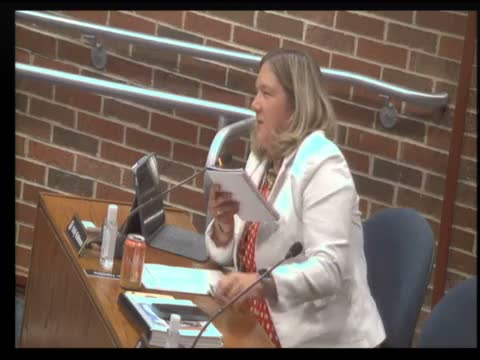
Chair Holly Robinson opened the Danbury City Council ad hoc meeting on school sites and facilities, saying the group formed after student testimony and that the panel’s aim was to get “everybody on the same page” about which buildings the district occupies, which are leased and who is responsible for day-to-day care. Robinson read a 24-location inventory and invited corrections from city and district staff.
Rich Gelberts, sites and facilities coordinator for the district, described operational roles: “the custodians are responsible for the daily cleaning of the building,” and his maintenance crew handles sheetrock, flooring and lock repair while a separate crew (described in the discussion as Sean’s group) handles HVAC, electrical and plumbing. Gelberts said schools use a work-order system called Operation Hero; principals and head custodians enter requests, and work orders are assigned, tracked and closed with time entries.
Council members pressed for clearer expectations on response times and whether the city and school systems should standardize work-order priorities. Gelberts said urgency flags (critical/important/regular) exist and that the district and public buildings currently operate two linked but distinct systems, with public-buildings orders propagated into the school system by administrative staff.
Antonio Idarola, Danbury’s public works director and city engineer, told the committee the scale of responsibility is large: roughly 1,600,000 square feet currently (rising toward about 1,900,000 with the Danbury Career Academy), maintained with roughly 11 staff across city facilities and schools. “Do you imagine maintaining the high school with $12,000?” Idarola asked, saying per-school operating allocations had been about $12,000 and that the mayor had recently increased the amount. The committee also discussed budget-line detail provided by the finance office: the school-buildings maintenance-repair line was cited as $684,000, with outside/purchased services at about $570,000 for the district’s portfolio.
Staff and council members emphasized that larger projects—roof replacements, major HVAC, windows—typically move into the city’s capital/bonding process when they exceed informal thresholds (staff indicated many capital items typically go above roughly $50,000 and are handled through bonding or voter referenda). Idarola noted the city’s bonding capacity is limited (he cited roughly $3,000,000 of bonding available under current constraints) so many large needs must be packaged for voter approval.
Several council members and staff recommended updating the maintenance agreement between the city and the Danbury Board of Education (a written agreement the staff said dates to 1987 with a 1997 update) to reflect modern responsibilities for grounds, playground surfacing, sidewalks, mowing and which party finances or executes different classes of repairs. Councilman Irving Fox and public-works staff urged a comprehensive facility study and a multi-year strategic plan (five to 20 years) so the city and schools can prioritize projects, coordinate grant applications and present coherent capital packages to voters.
Mayor Roberto Alves said staffing and deferred maintenance affect the whole city and encouraged the council to consider charter revision as a tool to clarify authorities and improve efficiency. School and city staff cautioned that the work-order system must be controlled to avoid being overwhelmed and suggested limiting who can enter requests while producing shared reports principals and requesters can view.
Before adjourning, Councilman Bridal moved to continue the ad hoc at a date to be called by the chair; the motion was seconded by Chair Holly Robinson, the chair called the ayes and the meeting was continued to a date to be set.
Next steps indicated by participants included: (1) circulating and reviewing the existing maintenance agreement for possible revision, (2) assembling a scope and cost estimate for a comprehensive facility study, (3) improving transparency via shared work-order reports, and (4) developing a prioritized list of capital needs to inform next year’s budget and any future bond referenda.