Get Full Government Meeting Transcripts, Videos, & Alerts Forever!
Get email alerts on the Infrastructure Finance topic
No spam. Unsubscribe anytime.
Board debates using new Infrastructure Development District for Armistead; staff gives mixed score
Summary
Staff applied Franklin’s new IDD policy to the Armistead development and found the project met the city’s ‘exceptional design’ criterion but did not meet the policy’s attainable‑housing test and only partially fulfilled public‑infrastructure enhancements; developers said the IDD is an enabling financing tool, while aldermen asked for clearer commitments on housing and connectivity.
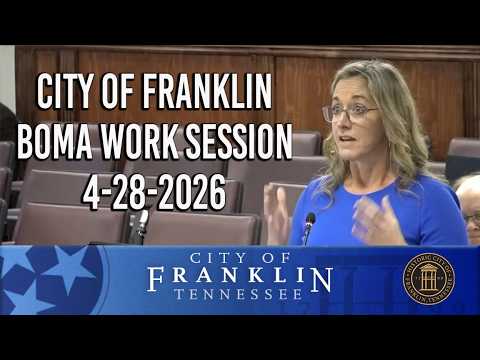
City planning and finance staff presented an IDD assessment for the Armistead project during the April 28 work session and concluded the development scores highly for design and placemaking but falls short of the city’s attainability and broad‑public‑infrastructure thresholds in the policy as submitted.
Staff told the board the Armistead plan demonstrates “exceptional design,” including multi‑day charrettes, public art commitments and an accessible trail system. But staff said the development, which was already approved, did not include concrete commitments to attainability (for example, income‑targeted units tied to a notice of intent) and does not clearly supply public infrastructure improvements beyond what the site’s approvals already require.
Michael Walters Young, the city’s chief budget and performance officer, ran staff’s IDD calculator for the project and reported that recurring revenues (property and sales tax) would exceed recurring maintenance and service costs in most funds, while one‑time fees and offset agreements could be structured to leave a net onetime benefit to the city after agreed offsets. He cautioned the analysis did not yet capture school impacts and said he’d work with Williamson County Schools to refine that part of the fiscal assessment.
Developer Craig Hoover and the Armistead team described the project as an “agrihood” intended to preserve historic farm elements, deliver a mix of housing types and provide broad public amenities. Hoover said the IDD is a financing tool that will enable the development to be delivered more rapidly and maintain local capital in the project’s funding stack. He summarized the developer view plainly: “This is a tool. It is not a gift.”
Board reaction was mixed. Several aldermen praised the project’s design and the idea of using IDD to help smaller, local developers, while others said qualifying on one policy criterion will not be sufficient and urged applicants to demonstrate multiple public benefits—especially durable attainability commitments and off‑site connectivity such as pedestrian links or turn‑lane acceleration that would not otherwise be provided.
Next steps: staff will incorporate the board’s feedback into the formal application and IDD ordinance implementation process; once Franklin is formally eligible as a host municipality under state law, the IDD application will proceed to a public hearing and formal vote under the new statutory framework.