Get AI Briefings, Transcripts & Alerts on Local & National Government Meetings — Forever.
Judicial commission backs recommended process-server exam, fee and ethics changes
Summary
The Judicial Branch Certification Commission voted to recommend amendments to process-server rules including a new statewide exam (recommended 75% pass), an exam fee of $125, expanded ethics requirements (record retention, prohibitions on police-like apparel) and an updated sanctions matrix; the changes will be published for public comment and sent to the Supreme Court for promulgation.
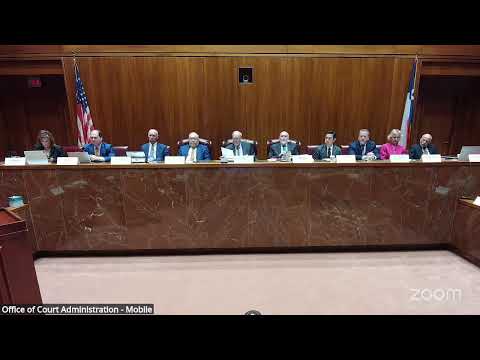
The Judicial Branch Certification Commission voted to recommend a package of changes to process-server regulation, including a statewide examination requirement, a $125 per-test fee and substantive revisions to the code of ethics and the sanctions matrix.
Commission staff presented the draft amendments and said they are intended to strengthen regulatory oversight of process servers and to bring consistency with other professional licensing rules. "We are recommending that they are required to pass at a score of 75 or higher on that examination," staff said while describing the exam timeline and implementation plan. Staff also told commissioners the exam would be administered remotely and the commission would publish the proposed rules for public comment before filing them with the Supreme Court for adoption.
Key changes the commission recommended include: adding an examination requirement for new certification applications (a suggested pass score of 75%), aligning exam administration time limits with other professions, a $125 exam fee for test takers, and a rule that applicants who fail three times must petition to retake. The draft also requires that process servers retain records of every service or attempted service for five years and imposes an obligation to promptly respond to inquiries from the commission, courts, parties or clients.
The code-of-ethics updates separate accuracy of returns from honesty, add a prohibition on wearing uniforms, badges or insignia that give the impression of being a peace officer (with an explicit carve-out for actual law-enforcement officers serving in their official capacity), and clarify reporting obligations when a license issued by another authority is suspended. Staff said these changes respond to recurring complaints and aim to give complaint-review panels clearer grounds for determining whether a violation is an honest error or intentional misconduct.
Commissioners debated whether the proposed 75% pass score should be higher and discussed adding clearer language to address knowing or intentional dishonesty. One commissioner asked, "Why are we accepting an examination rate that's not above average?" Staff replied that 75% has been used for comparable exams and that the commission could revisit the threshold after the exam is implemented and data are gathered.
The commission also approved recommended edits to the sanctions matrix to align suggested penalties with the revised code; the matrix elevates certain offenses (including convictions tied to service and failure to appear when summoned) and ties suggested sanctions to the severity of the underlying violation rather than imposing a fixed starting penalty.
A motion to recommend the proposed amendments for publication and adoption passed on a voice vote; the Chair announced "Motion carries." Staff said the items will be published for public comment after this stage and submitted to the Supreme Court for promulgation.
Next steps: the proposed rules and the sanctions matrix will be published for public comment, the commission will collect feedback, and the package will be forwarded to the Texas Supreme Court for final promulgation if the court approves.