Get Full Government Meeting Transcripts, Videos, & Alerts Forever!
Get email alerts on the Budget topic
No spam. Unsubscribe anytime.
Cosmopolis CPA warns of $430,000 bond shortfall; sewer contract with Aberdeen still unresolved
Summary
City contract CPA Tara Dunford told the Cosmopolis City Council the city‑hall bond fund shows a roughly $430,000 shortfall and that the sewer fund faces uncertainty because the contract with Aberdeen expired and Cosmopolis has not been billed for 2024–25 services; council and residents pressed for a plan while staff outlined potential fixes.
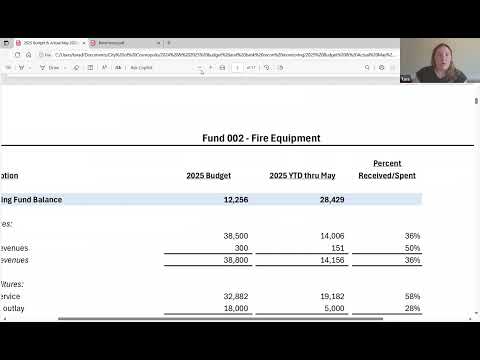
Tara Dunford, the city’s contract certified public accountant, told the Cosmopolis City Council on July 16 that the city’s bond fund for the new municipal building is in the red by roughly $430,000 and called the situation “a big problem that needs to be resolved.” Dunford reviewed budget‑to‑actual numbers through May 2025 and said overall general‑fund revenues were tracking slightly above budget but that the bond project had overspent the $3,000,000 authorized by about $430,000.
Dunford also flagged a separate but related fiscal risk in the sewer enterprise fund: Cosmopolis’s contract with the City of Aberdeen expired in 2023 and was not replaced. As a result, she said, Aberdeen has not issued a bill for 2024 and 2025 sewer services under a new contract and “we don’t know how much the bill from Aberdeen will be.” She cautioned the $300,000 shown as a sewer fund balance could be inadequate to cover what may be charged under new terms and described the prior agreement as a “very complicated formula” that produced year‑to‑year fluctuations.
Why it matters: the bond shortfall and the open Aberdeen billing together create a near‑term cash problem and complicate planning for utilities and capital work. Dunford urged the council to consider several legally distinct options to close the gap but emphasized that some require legal advice and formal council action.
What Dunford recommended: city staff and the mayor outlined a package of possible responses that would require follow‑up. Options presented to the council included using roughly $277,000 in the real‑estate excise tax (REET) fund for capital projects if the city‑hall project meets the comprehensive‑plan test; dedicating the roughly $50,000 of unbudgeted school permit revenue; seeking a legal opinion from bond counsel about applying a small leftover 1997 bond balance (about $50,000); temporary personnel savings (a proposed six‑month vacancy in a utility worker position would free about $23,000); or interfund loans. Dunford stressed that bond counsel should confirm whether REET and older bond proceeds can be used and that any budget transfers require a formal budget amendment.
Council and public reaction: residents asked whether Aberdeen could charge interest or late fees for the unbilled 2024 services and why contract negotiations have taken more than a year; Dunford and Mayor Springhill said the prior administration’s billing practice (payments in arrears) and changes in administration contributed to delays and that Aberdeen had not yet issued a 2024 bill because there is no active contract specifying terms. The mayor said Aberdeen will present to the council the following month and that the city has been negotiating a new, clearer contract to avoid the large swings the old formula produced.
Next steps: council members asked staff to continue negotiations with Aberdeen, to seek bond counsel guidance about REET and the 1997 bond balance, and to prepare a budget amendment to record delayed revenues and expenses related to the RCO grant. Dunford said June financials will be available shortly and offered to return with updated numbers and firmer recommendations.