Get Full Government Meeting Transcripts, Videos, & Alerts Forever!
Get email alerts on the Hb 14 55 topic
No spam. Unsubscribe anytime.
Delegate Caitlin Young and allied unions urge Maryland to divest $65.5 million in Israeli sovereign bonds
Summary
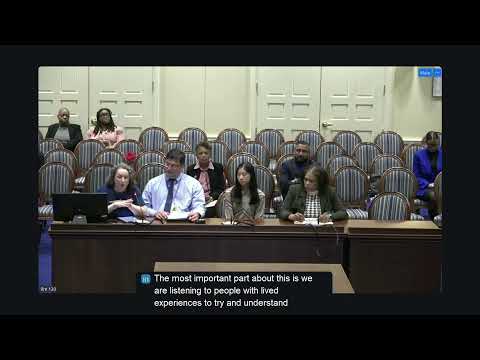
At a lengthy Appropriations Committee hearing, sponsor Delegate Caitlin Young and dozens of supporters urged a favorable report on HB 14-55, arguing Maryland should divest roughly $65.5 million in Israeli government bonds on moral and fiscal grounds; opponents warned of legal and financial risks.
Delegate Caitlin Young asked the House Appropriations Committee to give a favorable report to HB 14-55, telling lawmakers the bill would require the Maryland State Retirement and Pension System to divest direct investments in Israeli sovereign debt and government-backed securities.
"Investing in the bonds of a foreign government actively engaged in conflicts is a significant and volatile risk to our investment portfolios," Delegate Young said, arguing the roughly $65.5 million currently invested in Israeli sovereign bonds could be reinvested in Maryland. She framed the bill as both a fiduciary and moral obligation and pointed to prior state divestments — South Africa, Sudan, Iran and more recently actions in response to Russia — as precedent for the approach.
A long slate of one-minute witnesses backed the bill. Evie Frankel, reading a resolution from AFSCME Local 3399, asked the committee to "return a favorable report" and described union members’ objection to their pension dollars supporting the violence they said is tied to those investments. Shelly Cohen Fudge of Jewish Voice for Peace said the bonds are "unconditional loans to the Israeli government" and argued downgrades by major credit-rating agencies make the investments both ethically and financially risky. Zainab Choudhary of CARE/CAIR testified that the bill is narrowly tailored and protects fiduciary duties while asking the state not to profit from what she called human-rights abuses.
Supporters repeatedly cited the $65.5 million figure and urged reinvestment in schools, housing, and other Maryland priorities. Student organizers, teachers, faith leaders and local Jewish groups said divestment is consistent with past Maryland actions and not inherently antisemitic when directed at government policy rather than religious identity.
Opponents framed the bill differently. Jay Bernstein, president of Neir Tamid Congregation of Baltimore, said the bill is part of a movement to "isolate, defame, delegitimize, and ultimately destroy Israel," and urged members to reject HB 14-55. Bruce Bariano argued the trustees have a legal duty to maximize financial returns and warned divestment could ‘‘jeopardize the financial wealth of the pension fund.’’
Committee members asked witnesses about precedent and the fiscal note; advocates cited prior Maryland divestment measures and recent credit downgrades for Israel, while opponents emphasized trustee fiduciary obligations and potential costs. No formal committee vote or final action is recorded in the hearing transcript.
What happens next: The committee heard dozens of in-person and virtual witnesses and then moved on to other bills on the docket. HB 14-55 remains under committee consideration; the next procedural step will depend on the committee’s scheduling and whether members ask for further briefings or amendments.