Get Full Government Meeting Transcripts, Videos, & Alerts Forever!
Get email alerts on the School Transportation topic
No spam. Unsubscribe anytime.
Cumberland School Committee votes to begin "opt-in" bus ridership pilot to gather data for redistricting
Summary
The committee voted 6–0 April 29 to direct staff to launch an "opt-in" bus-ridership process aimed at collecting ridership data before any route changes; the consultant said average bus occupancy is about 55% and recommended the first year be for outreach and data collection.
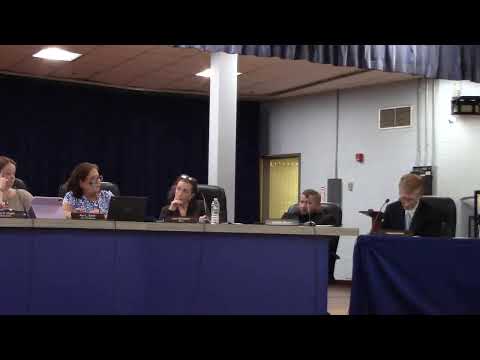
The Cumberland School Committee on April 29 voted 6–0 to direct staff to begin an "opt-in" bus-ridership pilot intended to collect ridership data ahead of redistricting and future bus-contract bids.
The decision followed a presentation from the Transpar Group, which recommended a phased approach: a first year devoted to outreach and data collection and a second year to use that information to adjust routes. The consultant said a route-yield analysis in Cumberland showed buses averaged about 55% occupancy. "That means 45% of those seats were empty," the Transpar Group consultant said, arguing that routing only families who confirm they will ride can reduce unnecessary costs and improve route efficiency.
Committee members asked detailed operational questions about timelines and impacts. The consultant described an enrollment window model used by the Rhode Island Department of Education: parents would have an April 1–July 31 window to opt in for the following school year; after school starts, a short window (typically 3–5 business days) would be available to add riders. The consultant recommended applying opt-in to general-education students but not to students with special-education transportation guaranteed by their IEPs.
Members pressed on savings expectations and ride times. The consultant cautioned that significant fiscal savings are unlikely in year one because the district will be collecting data and bringing families into the process, but that year two could allow the district to bid from a data-driven fleet size. He said average ride times in Cumberland are about 21 minutes in the morning and 23 minutes in the afternoon, with a target cap of 45 minutes for constrained routes.
Miss Smith moved to begin the process; Miss Shea seconded the motion. The motion passed 6–0. Committee members emphasized that the first year should focus on communication and avoiding abrupt service disruptions for families who later change their plans.
Next steps: district staff will begin public outreach and build the opt-in form and verification procedures; the committee can expect follow-up modeling and fiscal notes at future meetings.