Get Full Government Meeting Transcripts, Videos, & Alerts Forever!
Get email alerts on the Employee Homebuyer Assistance topic
No spam. Unsubscribe anytime.
Bluffton manager pitches $20,000 homebuyer aid for town employees; council members press for deeper help for lowest incomes
Summary
Town manager Steven presented a proposed homebuyer assistance program that would offer tiered down‑payment and interest‑buydown help for Town of Bluffton employees, with $20,000 for workers at or below 120% AMI, and smaller amounts at higher AMI tiers. Council members urged expanded aid for lower‑income staff. (Program to go to council in July.)
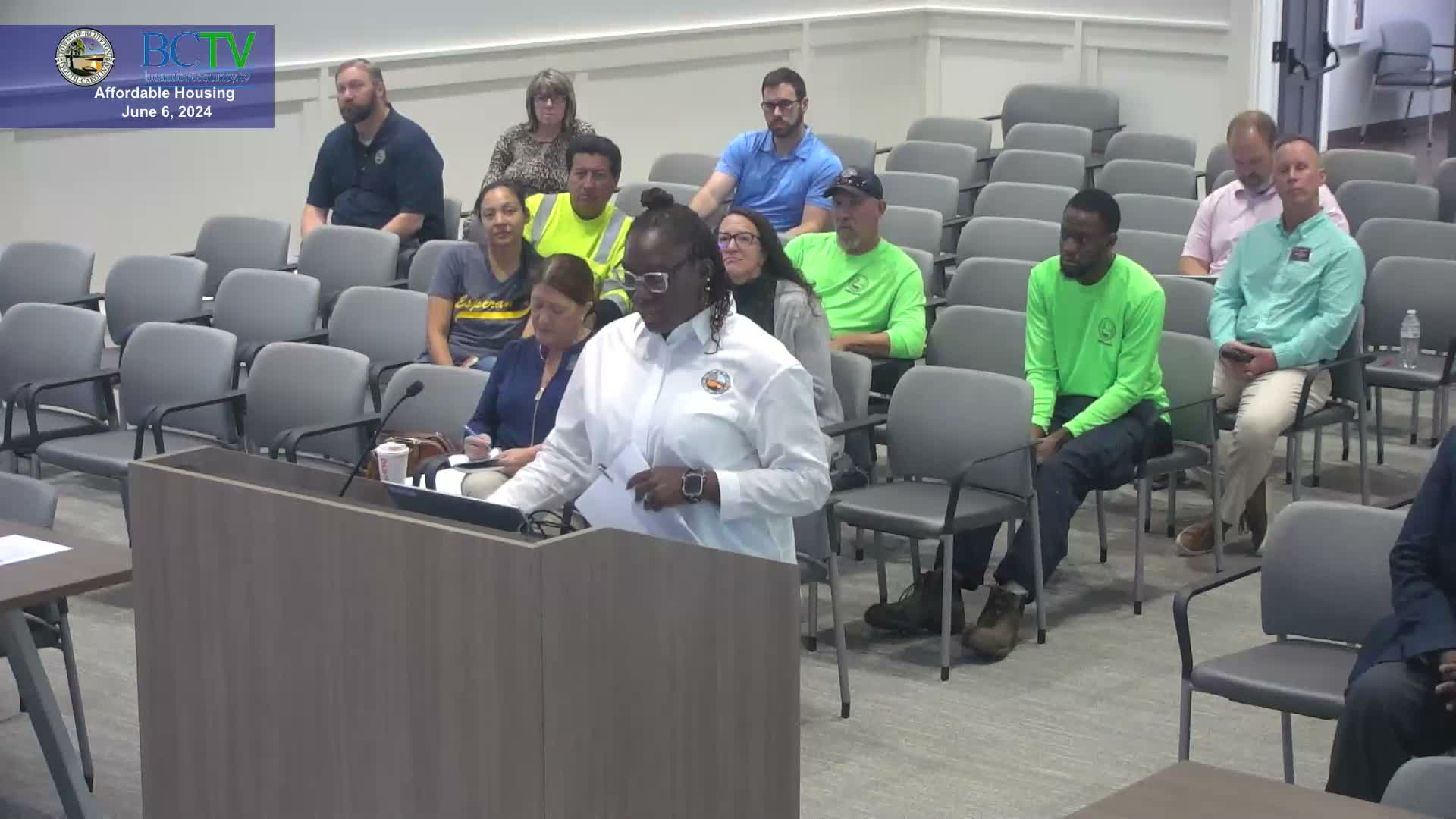
Town manager Steven presented a proposal to help Town of Bluffton employees buy homes near their jobs, saying the program would use tiered assistance to make homeownership more attainable.
Under the proposal, employees at or below 120% of area median income (AMI) would be eligible for $20,000 in assistance — described in the presentation as a 2% interest buy‑down plus a 3% down‑payment contribution. Employees between 121% and 140% AMI would receive $15,000, and those above 141% would be eligible for $10,000. The funds would be provided at closing as a five‑year lien on the property that would be forgiven annually as the employee remained in town service, Steven said.
“We would provide $20,000 of assistance,” Steven said, adding the assistance is structured so that the town can recover value if an employee leaves within the lien period. Community Works, a certified community development financial institution, would administer education and intake for the program, Steven said.
Council members and attendees pressed staff on thresholds and equity. One council member said a 120% AMI cutoff felt high for an "affordable housing" program and urged shifting more help to employees in lower AMI brackets. Steven said staff had chosen AMI tiers to match Bluffton’s market and offered to return to council with options that would increase assistance for lower‑income workers, including examples of how the $20,000 would affect monthly payments for homes currently on the market.
Staff explained the town budget currently contains funding for one participant at each tier (one at $20,000, one at $15,000 and one at $10,000) to allow the program to start; officials said they could expand funding with future budget amendments if uptake exceeds expectations. Steven said the measure will go to town council for formal adoption in July as part of next fiscal year’s budget process.
Officials also clarified property and closing requirements: eligible properties must be in good condition and ready for occupancy within 90 days of closing, and program funds would be disbursed at closing. Steven and staff noted other local employers (including City of Beaufort and Beaufort Memorial) use similar programs administered by Community Works, though their income thresholds and amounts vary.
The committee did not take a vote; the program will be presented to the council next month for formal action.