Get Full Government Meeting Transcripts, Videos, & Alerts Forever!
Get email alerts on the Smoke Free Ordinance topic
No spam. Unsubscribe anytime.
County Health Officials Report Few Fines, No Evictions in Year Two of Smoke-Free Multiunit Housing Ordinance
Summary
Public Health and Code Enforcement told supervisors the county mailed about 55,000 postcards, issued fewer complaints in Year 2 (≈33 new) than Year 1, provided education and signage in multiple languages, and administered seven fines in Year 2; staff said there have been no evictions tied to enforcement.
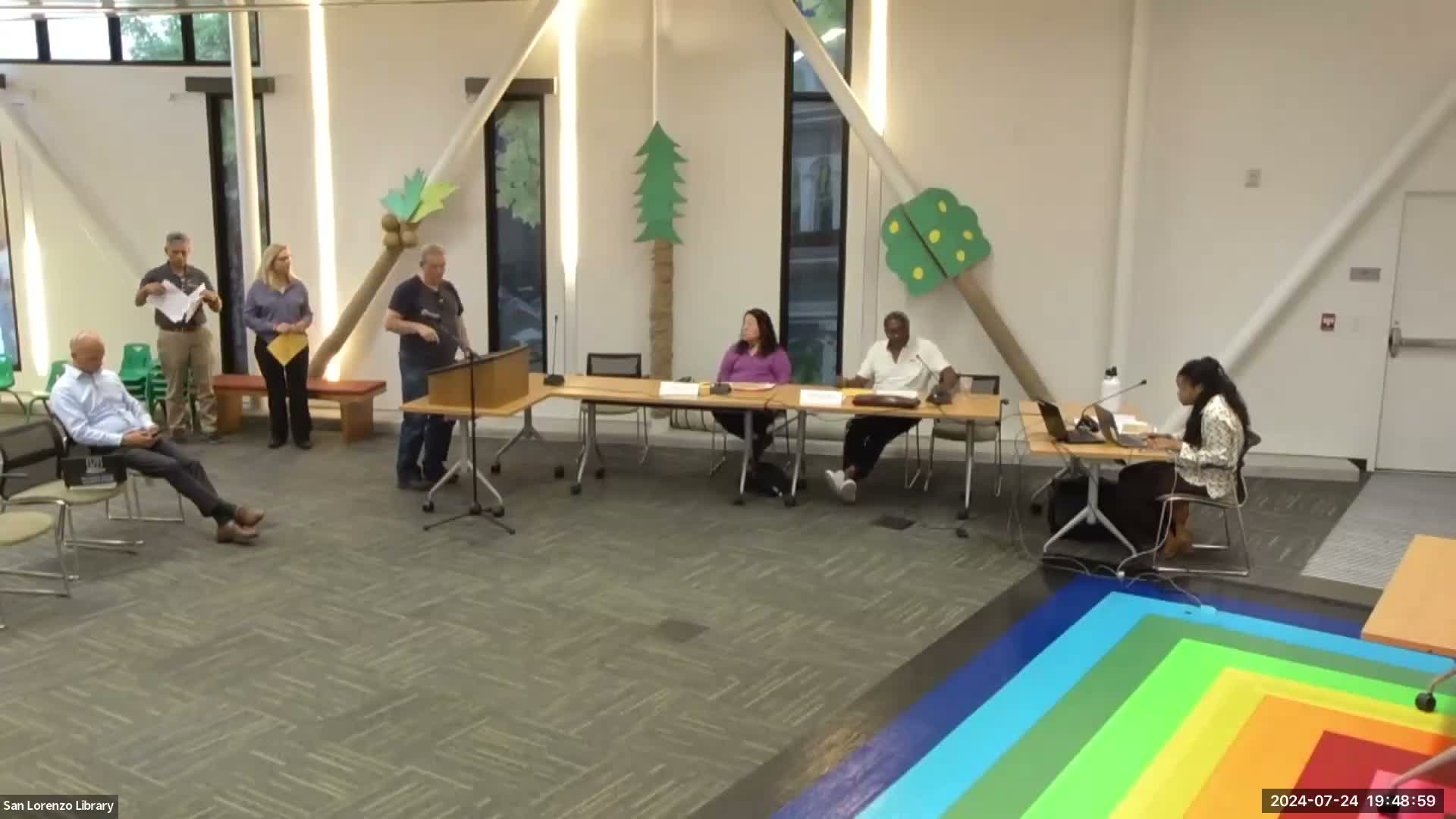
Alameda County public-health and code-enforcement staff updated supervisors on July 24 about the second year of a smoke-free multiunit housing ordinance that prohibits smoking of tobacco, cannabis and vaping in common areas and inside units in the urban unincorporated area.
"We sent out 55,000 postcards" and have kept education and signage efforts active, Paul Cummings, Tobacco Control Program Director, told the committee. Staff said the ordinance covers multiunit housing in urban unincorporated communities (Castro Valley, Ashland, Cherryland, Fairview, Hayward Acres and San Lorenzo) and that outreach materials are available in multiple languages.
Enforcement and outcomes: Tracy Andrews (Public Health) said Year 1 generated about 50 complaints and Year 2 produced approximately 33 new complaints; 13 cases carried over from Year 1. Public Health reported about 56 educational-warning letters sent; only two cases were referred to the Community Development Agency (CDA) in Year 2. CDA’s enforcement manager, Ed Labayog, said CDA has administered seven fines this year (11 fines in Year 1 for a total of 18 over two years) and that no eviction proceedings have resulted from ordinance enforcement to date: "There has been no evictions on any cases to date," he said.
Staff emphasized the program’s education-first approach: property managers often receive free signs and fact sheets and staff offer cessation resources or tenant-facing materials in multiple languages rather than immediate punitive action. When complaints continue after repeated warnings, CDA reviews the case and may assess fines; unpaid fines can be routed to collections or placed as tax liens depending on ownership.
Supervisors asked how the county publicizes complaint processes and whether signage is posted proactively. Staff said signs are provided on request in four languages and that the complaint form on the county website has been improved and translated in coordination with community partners. Cummings said staff will pursue further outreach (including newspaper coverage and satisfaction surveys) and better coordination with the county’s rent-registry and housing departments to ensure mailings and tenant protections are effective.
Why it matters: The ordinance affects tenants and property managers across the county’s urban unincorporated neighborhoods and aims to reduce secondhand exposure while minimizing housing instability. Some speakers, including school staff, emphasized the ordinance’s importance for children with asthma and urged clearer public information on how residents can report exposures.
Next steps: Staff will continue outreach in multiple languages, refine complaint intake and forms, and coordinate with the Community Development Agency and housing programs; the committee requested an update next year.
Sources: Paul Cummings (Public Health); Tracy Andrews (Public Health); Ed Labayog (Code Enforcement); Supervisor Tam and Supervisor Miley.