Get Full Government Meeting Transcripts, Videos, & Alerts Forever!
Get email alerts on the Certification Standards topic
No spam. Unsubscribe anytime.
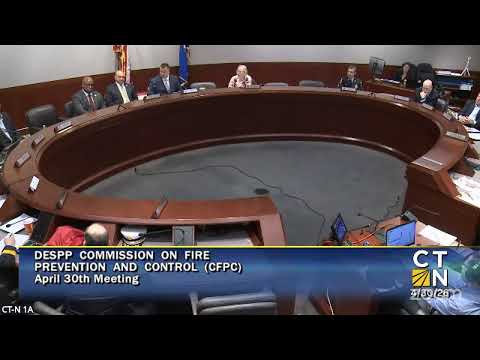
Certification unit outlines NFPA timeline, moves toward scenario‑based testing
Summary
Dave Clark said NFPA revisions could produce a draft by November and a 2028 release, with the certification unit expected to align testing by 2030 and begin testing to the 2024 NFPA 1001 standard on Jan. 1, 2027; commissioners asked for instructor input on pump‑operator prerequisites.
Dave Clark, who leads the certification unit, updated the commission on forthcoming changes to professional qualification standards and testing methods. Clark said the NFPA committee is working to combine certain hazardous‑materials/WMD standards and aims for a first draft in November; if that schedule holds, the new standard could be released in 2028 and the certification unit would have until 2030 to develop and begin testing to it.
“We're gonna begin testing of that at 01/01/2027,” Clark said in reference to transitioning to the 2024 edition of NFPA 1001 for basic firefighter professional qualifications. He described a move away from single‑station psychomotor exams toward scenario‑based testing with quality‑assurance elements, including nearest‑report incident review and candidate QA tasks.
Commissioners pressed two operational questions: whether Connecticut labor law permits lowering the certification age for exterior firefighter to 16 and whether the commission should revise prerequisites for pump operator certification (Firefighter I versus exterior firefighter). Clark said legal questions about age should be directed to the Department of Labor and noted that while NFPA removed Firefighter I as a prerequisite, many accredited agencies still require it. He recommended gathering instructor cadre and regional fire school input before proposing regulatory changes.
The commission tasked staff to collect instructor feedback and comparative prerequisite policies from accredited agencies; no regulatory changes were adopted at the meeting.