Get Full Government Meeting Transcripts, Videos, & Alerts Forever!
Get email alerts on the Tide Closure topic
No spam. Unsubscribe anytime.
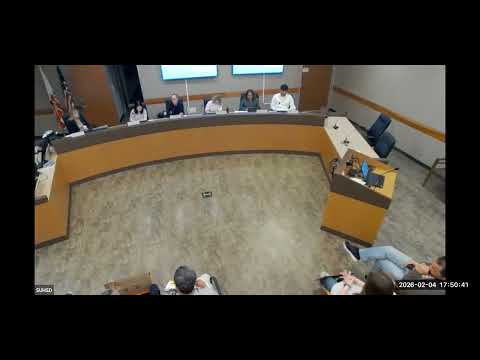
Board votes to close TIDE Academy in current form and move program to Woodside with implementation plan
Summary
After more than an hour of public comment opposing closure, the board of trustees voted to close TIDE Academy in its current form and approved transferring the program to Woodside High School, directing staff to produce an implementation plan and survey rising‑freshman interest (target ~60 students).
The board of trustees voted to close TIDE Academy in its current form and approved a plan to transfer the academy’s program to Woodside High School, directing staff to return a detailed implementation plan and to survey interest from rising freshmen.
The motion to close the existing TIDE campus carried by voice vote after lengthy public comment and trustee deliberations. The transcript records multiple trustees saying “Aye” in support; the record does not include a named roll-call tally.
Why it matters: speakers across the meeting—students, parents, teachers and community members—said TIDE provides a small‑school environment that supports neurodivergent students, individualized instruction, and strong social supports that many argued cannot be reproduced easily in a larger comprehensive high school. District staff told trustees the recommendation was driven by sustainability concerns: TIDE’s operating costs were presented to the board as roughly $8,000,000 a year and staff said closing or consolidating the program was a way to reduce projected budget pressure without immediate layoffs district‑wide.
Student and community testimony: dozens of members of the TIDE community urged trustees to reject the closure. "I was absolutely in shock," said Elias Khan, a senior at TIDE Academy, describing prior negative experiences at Woodside and warning that moving students there could jeopardize their safety and well‑being. Christopher Chang, a student advisory trustee, told the board that students’ lived experience and internal data contradict what analysts presented and urged trustees to acknowledge the value of the TIDE environment. Teachers and parents detailed impacts on transportation, counseling access and continuity of services; one commenter said the proposals would disrupt about 200 students and 400 caregivers and require families to add 50–60 minutes of commuting in some cases.
District rationale and conditions: a district staff member explained the financial context to the board and said TIDE’s estimated expense for the year is about $8,000,000, equivalent to the cost of dozens of teaching positions; staff framed consolidation as one way to mitigate a broader structural deficit while preventing or postponing layoffs. Woodside High School leaders, including Principal Karen Van Putten and co‑head counselor Francisco Negri, told trustees Woodside would welcome students and described supports Woodside would use for transitions—shadow visits, individualized counseling meetings, and cohorting possibilities—while acknowledging logistical limits and the need for close coordination with TIDE staff.
Board direction and next steps: trustees agreed to eliminate a three‑year phase‑out option and focus on an immediate transfer (Option 1) or similar transitional approaches. The board directed the superintendent and district staff to:
- Produce an implementation plan that details how TIDE’s program elements (nucleus, small‑class cohorting, CTE/dual‑enrollment components and wellness supports) would be preserved or adapted at Woodside; - Survey rising freshmen who have applied to TIDE to determine whether a minimum cohort (district staff indicated an initial target of about 60 freshmen would be needed to run cohorted sections) exists; - Develop concrete guardrails to protect staff assignments, program fidelity, student supports, and compliance with IEP/504 obligations; and - Report updates to the board regularly as a standing agenda item during implementation.
What the transcript shows (and what it does not): the transcript records robust public opposition and repeated requests for alternatives, and it records district staff quantifying costs and trustees debating timing, community trust and program sustainability. The transcript does not include a final, named roll‑call vote for either the initial motion to close in its current form or the subsequent motion approving Option 1; votes are recorded as voice “Aye” responses. The board also declined to keep the multi‑year phase‑out option on the table because the site principal said that timeline would perpetuate harmful uncertainty for students and staff.
Context and significance: supporters said TIDE is a small‑school model particularly effective for neurodivergent and high‑support students and warned that moving the program risks losing students and staff. District leaders said financial pressures and long‑term enrollment patterns require decisive action to avoid broader layoffs. Trustees framed the decision as an effort to minimize overall harm while mandating a careful implementation approach.
What comes next: district staff will survey families and return an implementation plan outlining how many freshmen would be required for cohorting, how counseling and IEP transitions will be managed, and what monitoring the board will receive. Woodside staff has invited TIDE families to visit Woodside and committed to individualized transition planning for students who elect to transfer.