Get Full Government Meeting Transcripts, Videos, & Alerts Forever!
Get email alerts on the Cascade Programs topic
No spam. Unsubscribe anytime.
Families and teachers urge board to protect Cascade Parent Partnership and Interagency programs from cuts
Summary
Dozens of parents, students and staff testified against proposed staffing reductions that would affect Cascade Parent Partnership and Interagency programs, describing them as safety-net schools for students with trauma or special needs and urging restored funding and clearer enrollment projections.
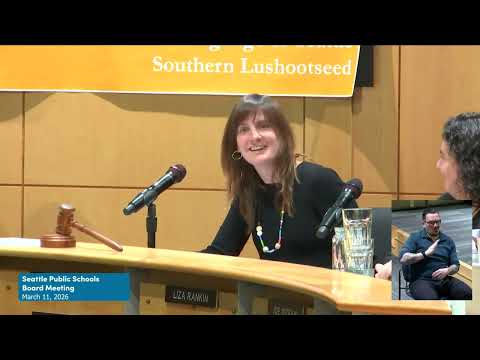
At least 20 members of the Cascade Parent Partnership and Interagency communities addressed the Seattle School Board during public testimony on March 11, pleading with directors not to let proposed budget cuts dismantle programs they said are essential for students with complex needs.
Vivian Van Gelder, an SPS parent, urged directors to vote against a proposed change to board policy 6114 that would raise the grant approval threshold, saying higher thresholds "would be an egregious step backwards for board budget oversight." She warned changes would reduce transparency into funds supporting students. "SPS grant funding needs greater board oversight, not less," Van Gelder said.
Multiple Cascade families described dramatic improvements after enrolling at Cascade Parent Partnership. Laith Wahelia, a third-grade student, explained that Cascade felt "like a big family" and that proposed staff cuts would threaten classes and services. Parent speakers repeatedly urged the board to reconsider enrollment projections that staff used to justify cuts; several said the district's purple-book projections undercounted current enrollment and risked destabilizing their school.
Teachers and staff echoed those concerns. Ari Chihomski, a social studies teacher at West Seattle High School, described the impact of staff displacement on students who depend on long-term relationships with trusted adults and asked whether students "furthest from educational justice" were being protected in the district's belt-tightening.
Interagency staff said proposed losses of roughly 17 FTE would "weaken" a program designed as a safety net for students with serious barriers to learning. "Therapeutic practices are not new at Interagency," said Demetrius Wheeler, student-family advocate at Interagency, adding that many displaced paraprofessionals bring cultural understanding and community ties that support students.
Speakers also called attention to procedural problems, saying principals had been told they cannot bring grant requests above the threshold to the board and that enrollment projections used in the purple book appeared incorrect. Several speakers asked the board to provide clearer avenues for schools to request review of mitigation decisions and to ensure equitable distributions of private fundraising across schools.
The board acknowledged the testimony during later deliberations on the student assignment plan and the grants/procurement policy package; several directors said public comment would inform committee work on policy and budget questions.
Outcome and next steps: The board passed the student assignment transition plan and directed committee review; board members also deferred some grant-policy changes for additional committee consideration after hearing public concerns.