Get Full Government Meeting Transcripts, Videos, & Alerts Forever!
Get email alerts on the Education Performance topic
No spam. Unsubscribe anytime.
Stockton Unified highlights progress on graduation and English‑learner indicators amid continuing math gaps
Summary
District officials presented the 2025 California Schools Dashboard showing graduation at 88.9% (green), English learner progress improving to 44.7% and several subgroup gains, while mathematics remains the largest performance gap (red). The district noted it has exited direct technical assistance.
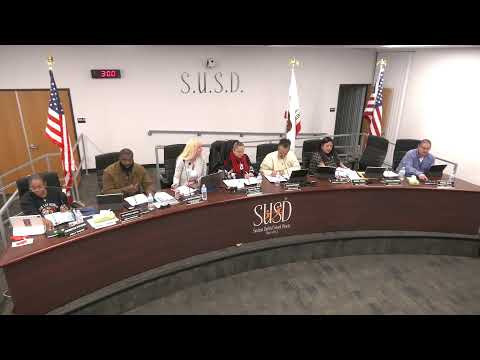
Stockton Unified’s director of research and accountability, Jason Murphy, presented the district’s 2025 results from the California Schools Dashboard and framed several areas of improvement alongside persistent challenges.
Murphy said the district’s graduation rate is now 88.9%, edging above the statewide rate of 87.8, and noted subgroup improvements (African American, English learners, foster youth and others) that helped power those gains. “Our graduation rate for Stockton Unified is now green and it's 88.9%,” Murphy told trustees.
Murphy described the English‑learner progress indicator as 44.7% (an increase of 2.5 percentage points) and said the district’s long‑term English learner subgroup moved from orange to green. By contrast, Murphy said mathematics remains an area of concern, with the district at red (96.6 points below standard) though several subgroups showed gains out of red to orange.
He noted the district had exited direct technical assistance with the state — a multi‑year process — and described next steps that include monitoring leading indicators (I‑Ready, chronic absenteeism, DNF rates), expanding targeted interventions (CTE completion, intervention teachers, Prism pilot), and soliciting community and student voice to guide improvement efforts.
Trustees asked follow‑up questions about barriers for English learners, targeted math supports, and strategies to prepare foster youth and students with disabilities for college and career readiness. District staff discussed interventions such as building thinking classrooms, intervention teachers, expanded tutors and CTE pathway supports.