Get Full Government Meeting Transcripts, Videos, & Alerts Forever!
Get email alerts on the Law Enforcement Prosecutor Programs topic
No spam. Unsubscribe anytime.
Sheriff’s office and prosecutor describe seizures, diversion programs and crisis response
Summary
Essex County sheriff’s captains described gun-seizure and buyback activity and a 24-hour tip line; the prosecutor’s office described a long-running mental-health diversion program, crisis-intervention training and plans to expand countywide.
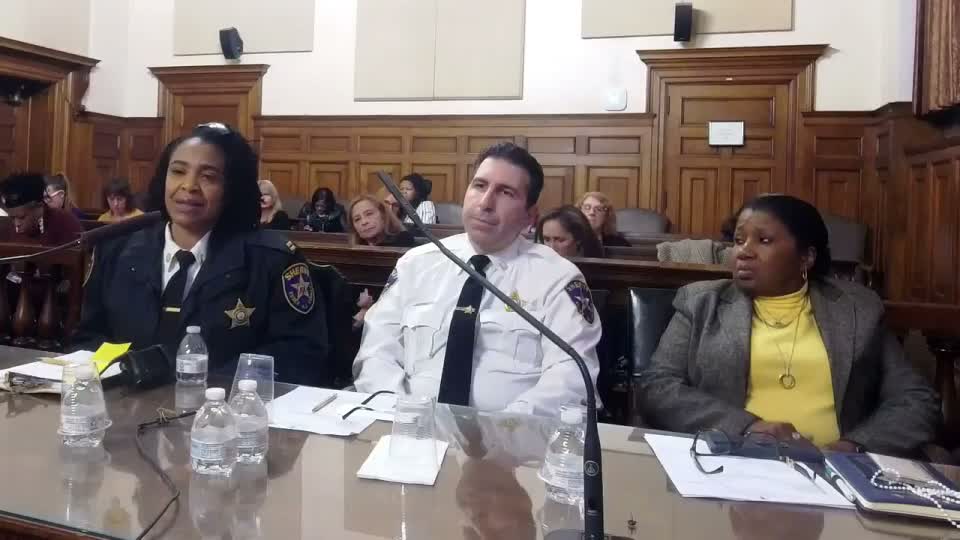
Representatives from the Essex County Sheriff’s Office and the Essex County Prosecutor’s Office told the county’s ad hoc gun-violence committee about enforcement and diversion programs they say reduce harm.
Capt. Thomas Jenkins said the sheriff’s office works with federal partners to pursue stronger convictions in illegal-handgun cases, runs occasional gun buyback events and maintains a 24-hour command post to receive anonymous tips. "We participate in gun buyback programs... these programs usually give cash for guns without asking questions," Jenkins said. Captain Ben Del Grande noted roughly 40 guns recovered annually in recent years and emphasized use of New Jersey’s extreme-risk protection order process for cases involving mental-health concerns or domestic violence.
Gwendolyn Williams, an executive assistant prosecutor, described the Essex County Prosecutor’s Office mental-health diversion program, in operation since 2011, and its restorative-justice approach that can keep qualifying defendants (including veterans) out of incarceration while providing treatment. Williams outlined county training for crisis responders, an "Arrive Together" model that pairs mental-health professionals with law enforcement, summer internships for high school students and coordinated youth conferences.
Both offices said confiscation and ERPO filings occur when courts and facts warrant them; Williams said assistants review ERPO petitions and present applications to court. Commissioners praised community partners and asked for data-sharing to inform future county funding decisions.