Get Full Government Meeting Transcripts, Videos, & Alerts Forever!
Get email alerts on the Courts Performance topic
No spam. Unsubscribe anytime.
Collin County judges say courts are "doing more with less," report top state disposition metric
Summary
Judges told commissioners the district courts disposed of about 31,750 cases and claimed Collin County leads Texas on a key case-disposition metric; judges said population growth is driving filings and that civil filings rose about 30% last year.
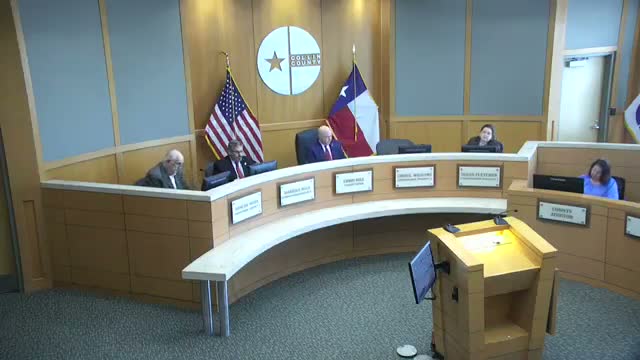
Judge Tom Novak presented statistics to the Collin County Commissioners highlighting what he called an unusually fast pace of case disposition in the county’s district courts, saying the courts have "done more with less." He told the court that the county ranks among the top in Texas on a key disposition metric and described the data as "the best metric in the state."
The judge said the report’s figures use population estimates through July 2024 and that the county population is expected to exceed about 1,250,000 residents, a trend he said contributes to rising caseloads. He clarified an apparent discrepancy in the packet, stating that the 31,750 figure shown in the materials refers to cases disposed, not filed.
Tom Novak also highlighted workload differences by case type and noted that district courts in Collin County handle a larger population than many Texas counties. He cited juvenile-justice figures—about 1,000 juvenile cases adjudicated last year—and said those numbers affect court workload and budget. "We don't have backlogs," Novak said, adding that cases move "much more quickly than anywhere else," which he argued leads to savings in time and money for litigants and the county.
A commissioner praised the presentation, pointing to the chart’s "pink bars" and noting the average time-to-disposition for many case types is roughly five months and six days. Another commissioner asked whether recent changes in statutory limits had reduced filings for motor-vehicle losses; Novak replied that civil filings actually rose—"about 30 percent" year over year—so the cap change had not reduced filings at the district-court level.
The commissioners thanked the judges for the presentation and were offered additional data on request. No formal action was taken on the presentation; the court moved on after the Q&A and adjourned later in the meeting.