Get Full Government Meeting Transcripts, Videos, & Alerts Forever!
Get email alerts on the Border Security topic
No spam. Unsubscribe anytime.
Laredo mayor briefs council on federal talks; residents urge city to oppose river wall
Summary
Mayor Victor de Trevino and staff briefed the council on recent meetings with federal partners about alternative border-security measures. Dozens of residents at public comment urged the council to reject a river wall, citing property loss, flood risk and environmental harms.
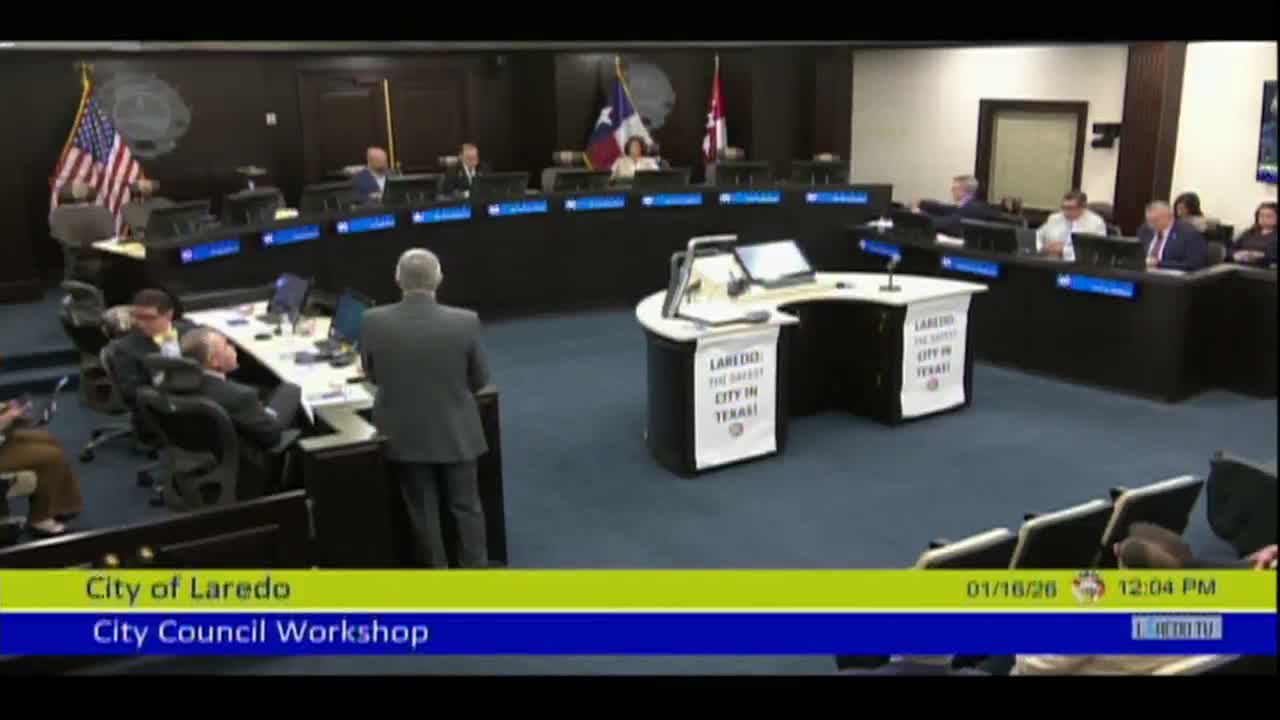
Mayor Victor de Trevino opened a Jan. 16 workshop to update the Laredo City Council on the city’s intergovernmental work on border security, saying the administration has been meeting with federal officials and congressional staff to press for solutions that balance security, commerce and residents’ quality of life.
The mayor said the city is seeking to translate its local framework into specific proposals for federal review and expressed appreciation for assistance from congressional offices. “These conversations are focused on planning, coordination, and ensuring…any proposed federal policy and infrastructure implementation reflects the realities of our community,” he said.
City staff presented alternatives to single-purpose steel or concrete walls, including increased inspection capacity at port entries, dredging to support quieter patrol craft, and “dual-purpose” flood-retention structures that would function as both flood control and deterrent. Staff emphasized the trade-offs — engineering footings must reach stable ground in silty riverbanks, access points would be required, and detailed hydrologic modeling remains incomplete.
The presentation prompted repeated council questions about floodplain impacts and how any structure would affect water flow toward Nuevo Laredo and access to river overlooks. Staff said design details and hydrology studies are still being developed and that access points and gates would be part of any riverbank structure.
Public comment was sharply critical of a proposal to build barriers along the Rio Grande. Elsa Hall, who identified herself as a landowner in the proposed alignment, asked the council to “absolutely say no wall, no buoys,” warning that construction would take homes and green space and could enrich criminal networks by forcing migrants into smuggling routes. C.Y. Benavides, representing the Boys & Girls Club and describing his own riverfront holdings, said a stem wall would ultimately fail and called for federal investment instead of permanent land seizures.
Ricardo De Anda, an attorney representing a coalition of Rio Grande landowners, said the group has retained national consultants and will contest any condemnations; he described geomorphology analyses that predict the wall would act like a dam in extreme storms. Environmental and water-policy speakers urged the council to prioritize water-security investments and services over massive wall spending, arguing long-term fiscal and public-health harms could follow.
City officials said they have asked federal partners about accepting design alternatives that meet federal security objectives and international flood-control standards. The council did not take action at the workshop; city staff said they will continue outreach with federal agencies, provide additional technical modeling, and convene further discussions with the public and legal counsel.