Get Full Government Meeting Transcripts, Videos, & Alerts Forever!
Get email alerts on the Transportation Efficiency topic
No spam. Unsubscribe anytime.
School committee reviews transportation analysis that could change bell times to cut bus costs
Summary
Administration presented a bus-efficiency study showing overlapping routes and underfilled buses; a three-tier bell schedule could reduce 6–8 buses and yield up to $500,000 in potential annual savings, though any change would require stakeholder notice and further data work.
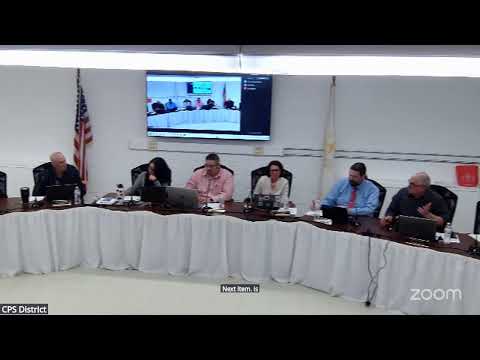
The Coventry School Committee heard a detailed transportation-efficiency briefing on May 7 that proposed adjusting school start and end times to create three discrete bus tiers and reduce overlapping routes.
Superintendent Don Cowart summarized an analysis produced through Department of Education funds and described how current bell times create overlap between high-school, middle-school and elementary runs. Cowart said the present pattern often has buses running well under capacity and that overlaps force the district to run more buses than necessary. "Instead of having three defined bus tiers, you have one gigantic tier, which is very inefficient," he said, and presented example schedules showing how modest shifts in start times could let one bus serve a full tier rather than multiple partially filled runs.
The report identified operational measures and caveats: Western Elementary’s geographically dispersed ridership and narrow roads create constraints that may require a slightly different schedule for that school; average morning on-time performance is about 88% but the afternoon is closer to 65%; average elementary ride time reported in the analysis was about 39 minutes with average riders per run around 24. The consultants estimated a bus costs roughly $460 per day (about $80,000–$100,000 per year when including driver, monitor, fuel and maintenance) and said cutting six to eight buses could produce a potential savings up to about $500,000 annually, though Cowart emphasized the figure is a projection, not a guarantee.
Members asked questions about equity and child-care impacts if start times change. Cowart said the administration will meet with the district transportation analyst (Mandy) and return with concrete implementation options, noting administrators prefer to give families and staff months of notice before changing start times or bus stops.
Next steps: Administration and transportation staff will meet to refine schedule scenarios and return to the committee with studied options and community-notification plans.