Get Full Government Meeting Transcripts, Videos, & Alerts Forever!
Get email alerts on the Data Centers topic
No spam. Unsubscribe anytime.
Cameron County adopts resolution urging safeguards and independent reviews for data centers
Summary
The Cameron County Commissioners Court on April 7 adopted a resolution opposing high‑water‑use cooling systems and calling for transparent reporting and independent impact analyses before large data‑center projects proceed in the county or region.
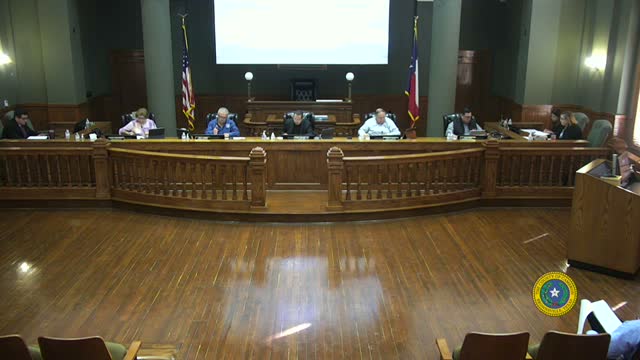
The Cameron County Commissioners Court on April 7 adopted a resolution urging state regulators and developers to require stronger safeguards, transparency and independent impact reviews for large data center developments that could strain local water and electrical resources.
County Judge (speaker 1) read the resolution at the meeting, saying the court "formally expresses opposition to the use of open loop evaporative cooling systems or other high volume potable water consumption technologies" and that any future data center should demonstrate sustainable supply and meaningful mitigation safeguards.
The resolution, which commissioners approved without recorded opposition, asks state regulatory agencies to require public reporting of anticipated electricity demand, water usage and infrastructure impacts for proposed data centers prior to final approval. It also calls for rigorous independent assessments of impacts on electricity reliability, transmission capacity, water availability and drought‑contingency planning, and urges statewide standards such as closed‑loop cooling, reclaimed/nonpotable water use when feasible, and load‑management participation.
"This is a step in the right direction," said a commissioner (speaker 3) during debate, adding that the draft contains provisions the court would like to see and can be amended later as needed. The judge framed the policy choice in practical terms, noting inquiries about a possible data center near the Harlingen area and emphasizing concern about water use given the county’s drought conditions.
The resolution recognizes that under current Texas law counties do not have broad zoning authority, and it therefore asks the Legislature to provide counties and municipalities "meaningful participation and authority in land use, infrastructure planning, and resource impact review related to large scale data center developments." The court said it supports responsible economic development but will condition support on enforceable safeguards to protect grid reliability, water sustainability, agricultural lands, habitat and local infrastructure.
Next steps flagged by the court include further review and possible future amendments to the resolution as commissioners and staff gather additional technical information and model results.